


Digvijay is a Computer Science graduate with a deep passion for technology. His journey into tech writing began in 2018 with software and product reviews, and he’s been exploring the digital space ever since.
He joined MUO as a full-time writer in 2022, where he covers how-tos, explainers, and tech guides focused on Android, entertainment, and the internet.
Digvijay has previously contributed to several reputable publications, including Alphr, GuidingTech, TheWindowsClub, and MakeTechEasier.
Outside of writing, he enjoys traveling and learning about different cultures, as he believes new experiences spark creativity.
Battery drain isn’t always caused by heavy apps or an aging phone. Android phones lose power faster because of system settings running quietly in the background. Features tied to the display, location, syncing, and connectivity often stay active all day, even when you’re not using them directly.
Because these options are built into Android and usually enabled by default, they rarely get checked after the initial setup. A few changes to these settings can result in a significant improvement in battery life.
Always-on display and lock screen extras
Keeps your screen active all day
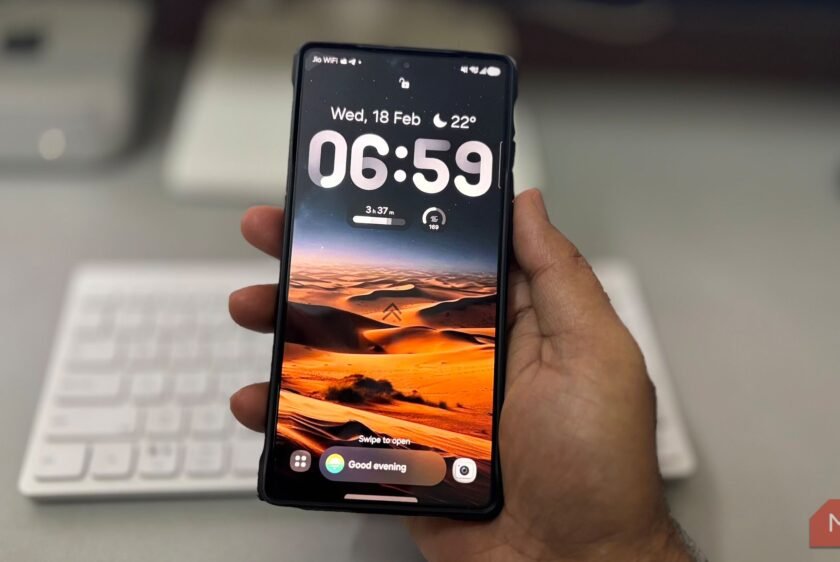
If your battery drops even when the phone sits untouched, the lock screen is one of the first places to check. Many Android phones keep parts of the display and sensors active throughout the day through features like always-on display, lift-to-wake, tap-to-wake, and notification wake-ups. Some lock screens also show widgets, animations, and live previews that remain active even when the phone is idle.
Always-on displays tend to have the biggest impact. They keep a portion of the screen lit to show the clock and notifications. It may look minimal, but it runs continuously. On phones with brighter panels, that constant activity slowly eats into standby time. Notifications make it worse by repeatedly waking the screen to show previews.
To reduce this activity, start with the always-on display settings. Turning it off entirely or scheduling it for specific hours can cut unnecessary usage. Next, turn off any lock screen wake gestures or notification wake behavior you don’t need, so the screen won’t light up with every movement or alert. If you have extra widgets or animations on your lock screen, trimming them may also help the phone sit idle when not in use.

Location scanning running in the background
Your phone keeps searching for signals
Location activity on Android isn’t limited to apps that actively use maps or navigation. Android phones also use nearby Wi-Fi networks and Bluetooth signals to estimate position. This improves accuracy for features like nearby sharing and device discovery, but it can also leave the phone scanning for signals throughout the day.
Even when location access is disabled, Wi-Fi and Bluetooth scanning may remain active in the background. The phone periodically searches for nearby networks and devices, so apps can lock onto your position faster when needed. That constant scanning is subtle, but over time it reduces standby battery life.
When extra accuracy isn’t necessary, disable Wi-Fi and Bluetooth scanning in Location services to stop the phone from searching for nearby signals. Then review app permissions and set most to While using the app instead of Always. Keeping location access limited to essential apps reduces how often the phone checks your position in the background.
High refresh rate locked at maximum
Many Android phones now ship with high refresh rate displays set to run at 120Hz by default. This makes scrolling and animations look smoother, which is why the setting is often enabled out of the box. But that smoothness comes at a cost, especially when the refresh rate stays locked high, as the display refreshes faster whenever the screen is on.
The display is already the biggest battery consumer, and running it at a constant 120Hz adds to that load. A higher refresh rate means the screen refreshes more times per second, even during simple tasks like reading messages or browsing static pages. When it stays locked at the maximum level all day, the extra power draw continues, whether smoother motion is needed or not.
Switching from a fixed high refresh rate to adaptive mode is usually the easiest fix. Adaptive refresh allows the phone to scale down to lower rates when the screen is mostly static and ramp back up when smoother motion actually helps. If battery life matters more than visual smoothness, setting the display to standard 60Hz can stretch screen time further.
For more control, check if your phone supports per-app refresh limits. On some Realme GT/Pro models and OnePlus phones, you can manage this inside the Screen Refresh Rate settings, while Samsung offers similar control through the Good Lock Display Assistant module, which lets you limit selected apps to 60Hz.
Background app activity and syncing
Apps keep working when you’re idle
Battery drain also occurs from apps you haven’t opened in a while. Android apps sync emails, photos, backups, and other data in the background, so everything is ready when you open them. Social media, cloud storage, and shopping apps are often the most active, quietly refreshing throughout the day.
Constant syncing keeps the phone awake even when it’s idle. Background checks look for new data and may trigger notifications or other activities. Some apps may also use location (if permitted) or pull data over the network. Over time, that cycle prevents the phone from staying in a low-power state for long, slowly reducing standby battery life.
Check battery usage in Settings to see which apps stay active in the background. Turn off auto-sync where you don’t need it, especially for shopping or travel apps. Switching certain apps to the Restricted battery mode further limits how often they run, helping the phone stay idle longer.
Make your battery last longer
Even when you’re not actively using wireless features, your phone may still be searching for connections. Android regularly scans nearby Wi-Fi networks, Bluetooth devices, and sharing options to connect quickly when needed. Background features like Nearby Share and Quick Share can also keep the phone checking for nearby devices and signals.
So, reviewing these background settings once in a while can prevent unnecessary battery drops. A quick check of display behavior, background sync, and location access is often enough to keep your phone charged more steadily throughout the day.


 English