


Haley Zaremba
Haley Zaremba is a writer and journalist based in Mexico City. She has extensive experience writing and editing environmental features, travel pieces, local news in the…
More Info
Set us as your preferred Google source
Premium Content
By Haley Zaremba – Nov 23, 2025, 2:00 PM CST
- A record wave of EV leases expiring in 2026 is expected to flood the U.S. market with used EVs and push prices sharply lower.
- U.S. policy reversals, expiring tax credits, and new tariffs are prompting automakers to delay or cancel EV models while rattling global markets.
- Despite the turmoil, falling prices and strong international demand could still drive EVs toward a 40% global sales share by 2030.
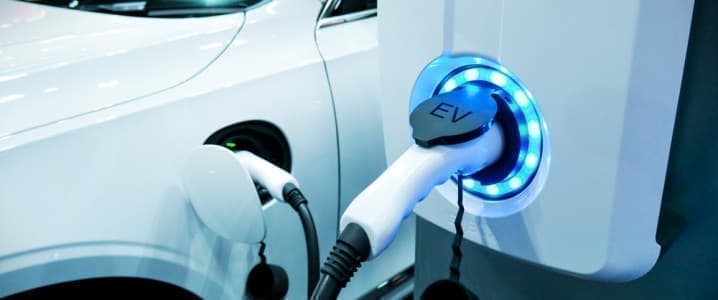
The global electric vehicle sector is facing massive uncertainty. Policy whiplash, the end of a leasing era, and a crowded market are creating a complicated landscape for EV makers, and a price war could be coming down the pike. Times are very tough for EV makers, but may be shaping up to be better than ever for EV buyers.
A record number of EV leases will be returned in the United States in 2026, causing a surge in used EV supplies and therefore making the used vehicles more affordable than ever before. At least 243,000 EV leases are set to expire, and a recent study from J.D. Power projects that this figure could reach 330,000, representing a 3-fold increase over 2025 levels.
Accordingly, Auto Blog reports that an “EV Avalanche” is in store, and with incentives expiring and inventories rising across used car lots, a price war is likely to make the vehicles even cheaper than gas cars. But will consumers embrace the newly affordable technology? Experts aren’t so sure.
EV policy is undergoing a massive shift in the United States as the Trump administration pulls the plug on industry incentives. The $7,500 federal tax credit for electric vehicles expired on September 30 of this year. “With EV tax credits expiring, and automakers continuing to prioritize hybrid powertrains, drivers may choose to ditch electrification,” says Auto Blog. “Though EV sentiment remains high, the electrification bubble is showing some stress.” Currently, EVs represent only six percent of new vehicle sales, down from 12.9 percent in September, when sales surged as consumers rushed to buy before tax credits ended.
As a result, automakers including Ford, Kia, and General Motors are cutting back on their EV manufacturing for U.S. markets. “They’re explicitly delaying when they’re going to bring out new models, or in some cases, pulling back models,” Elaine Buckberg, senior fellow at Harvard’s Salata Institute for Climate and Sustainability and former chief economist at General Motors, recently told Marketplace. “They’re just not moving as ambitiously into the market as they had been planning to six months ago.”
“They’re looking at this landscape where they’re facing multibillion dollar tariff hits, so they really need to think about their profitability,” Buckberg went on to say.
Those tariffs are causing turmoil on the other end of the trade route as well. When the largest economy in the world is facing market uncertainty, global markets feel the impact. China’s Xiaomi corporation, which produces EVs and smartphones, among other technologies, has seen a remarkable crash in recent months, going from being the market darling to the nation’s worst-performing tech stock seemingly overnight.
Meanwhile, Beijing is fighting hard to pressure Western powers to reverse their 100% tariffs on Chinese EVs by targeting farmers in Canada, Europe, and the United States. “Beijing has levied billions of dollars of agricultural sanctions against the U.S., the European Union, and Canada, after they imposed duties on Chinese EVs to protect their own automakers,” says a Rest of World report from this week. “China has said it will lift farm tariffs only when Western governments drop EV duties.”
Despite extreme volatility in the global EV sector and a “grim” outlook going forward in the United States, there is still hope for the future of EVs worldwide. EV sales are still going strong in many regions around the world, and will continue to pick up as EVs continue to get cheaper – brutal price wars within the Chinese market ensure that prices in markets without tariffs will remain low. The International Energy Agency’s Global EV Outlook 2025 projects that “despite uncertainties in the outlook, the share of electric cars in overall car sales is set to exceed 40% in 2030 under today’s policy settings.”
By Haley Zaremba for Oilprice.com
More Top Reads From Oilprice.com
- Copper Soars to Record High on Supply Crunch and Brighter Outlook
- India Plans $11.3 Billion Bailout for State Power Firms
- Japan Tells Trump Tokyo Will Struggle to Ban Russian LNG Imports
Download The Free Oilprice App Today


Back to homepage
Haley Zaremba
Haley Zaremba is a writer and journalist based in Mexico City. She has extensive experience writing and editing environmental features, travel pieces, local news in the…
More Info
Related posts
Leave a comment


 English