

“” data-is-feature-img=”true”>

Brandon Miniman / MakeUseOf

Pankil is a Civil Engineer turned freelance writer from Ahmedabad, India. As a long-time Windows and Android user, he has extensive knowledge of both operating systems and specializes in creating how-tos and troubleshooting guides.
Pankil has been writing about Windows, Android, and iOS since 2021. He has written over 1200 articles across reputable publications like MakeUseOf, GuidingTech, and TechWiser.
Outside of his writing endeavors, Pankil is an avid football fan and loves to plan his international travels with his wife in his free time.
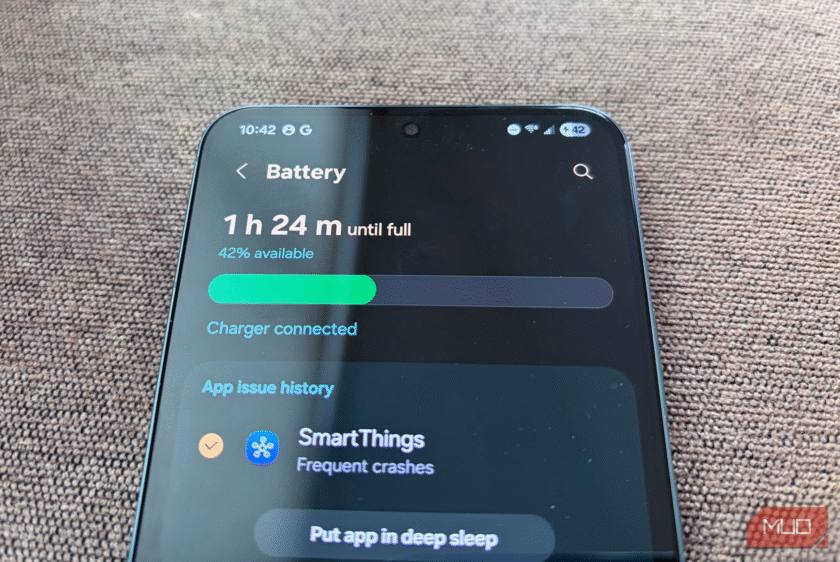
Like most people, my phone’s battery life is always a concern for me, especially now that it’s a couple of years old. Because of that, I often try changing different settings to squeeze out a bit more endurance. And while doing that, I came across a One UI-exclusive feature that made a massive difference to the battery life.
Enabling the sleeping apps feature in One UI automatically puts lesser-used apps to sleep. This may sound simple, but it ended up improving my phone’s battery by more than 30%, and that too, without making any compromises.
How sleeping apps stop battery drain
The hidden cost of apps you aren’t using
Like most people, I used to complain a lot about my Galaxy phone’s battery not lasting as before. I blamed software updates, battery health, and even One UI. What I didn’t pay attention to was that, between now and then, I had installed dozens of new apps. Some of them I barely remembered downloading.
The problem with having this many apps is that they continue to run in the background even when you don’t use them. They check for updates, refresh content, sync data, send notifications, and constantly ping servers for updates. The thing is, one app doing this barely matters. But when you have twenty or thirty doing it all day, it absolutely does.
Sleeping apps feature in One UI fixes this nicely. You can turn it on by heading to Settings > Battery > Background usage limits. Once you do, it keeps track of apps you don’t use often and puts them to sleep. This essentially stops these apps from running in the background constantly and consuming resources.
There’s also a deep sleep state that prevents apps from running in the background entirely. These apps are only run when you open them. It’s perfect for those apps you rarely touch but still need to keep installed, like airline apps, old games, or that battery health app that you check every once in a while.
What I like the most about this feature is that it doesn’t force me to make any compromises for battery life, like lowering the screen refresh rate, reducing the screen brightness, or keeping the power-saving mode on.
Put unused apps to sleep or deep sleep state
Decide which apps deserve background access
Although the sleeping apps feature works entirely on its own, you can also manage it manually. This is handy if you don’t want to wait for One UI to analyze your app usage and decide which apps should be limited.
Head to Settings > Battery > Background usage limits > Sleeping apps or Deep sleeping apps. Tap the plus icon at the top, and start adding apps. If you want to remove any app from the list, tap the three-dot icon in the top right corner and choose Remove.
You can also tell your phone to do the opposite. That is, tell it which apps you don’t want to put in sleep mode. This option is useful if there’s an app that you only use occasionally but want to keep active so you don’t miss any important alerts. Tap Never auto sleeping apps and start adding such apps to this list.
I’ve added apps like Asana, Samsung Health, and Messenger. These are apps that I may not open much on my phone, but it’s important that they continue running in the background and send notifications.

I wish I’d changed these default settings on my Samsung phone sooner
The best features are already on your Samsung phone, just not turned on.
Don’t go putting all your apps to sleep
Some apps need to stay awake
While it’s tempting to put just about every app you don’t use daily into sleep mode, it’s not a great idea. That’s because when you restrict an app’s ability to work in the background, some of its features might stop working.
For instance, a cloud storage app like OneDrive needs to be running in the background to back up data on your device. Put it in sleep, and your backups will keep failing. Messaging apps also need to remain active to send you timely notifications. And if you’re like me and mostly keep Asana or Trello on the phone to stay on top of notifications, putting them to sleep defeats their entire purpose.
There’s also another way to decide if an app should be in sleep mode or not. Head to Settings > Battery > View details. Here, you’ll see a list of apps that have consumed the most battery. Tap any app, and you’ll also see how many times it has woken your phone up in the background. If it’s an app you don’t care about, simply turn on the Background usage limits toggle to put it to sleep.
Sleeping apps feature proves that better battery life does not have to be complicated. Sometimes, it’s just about letting your phone work a little smarter. Of course, if your Samsung phone’s battery is still not holding up, it may be worth checking the battery health and seeing if it’s time for a replacement.


 English