
Singapore
Cnergy has seen a high number of new sign-ups from private-hire vehicle drivers in recent days, said the CEO of its parent company Union Gas Holdings.
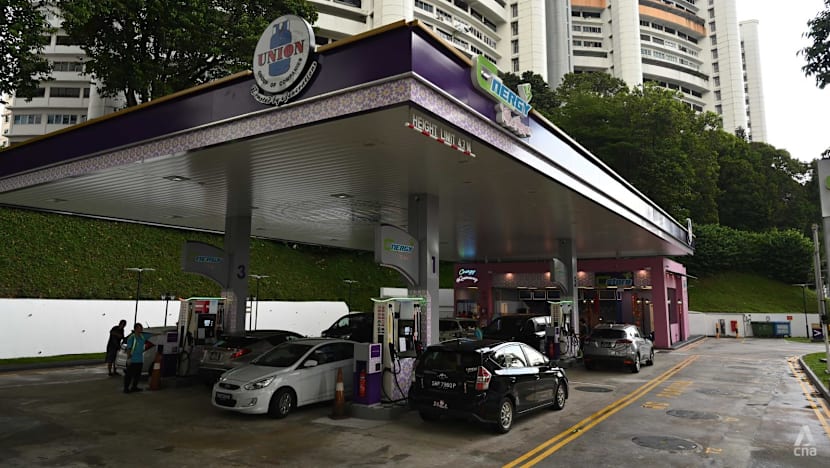
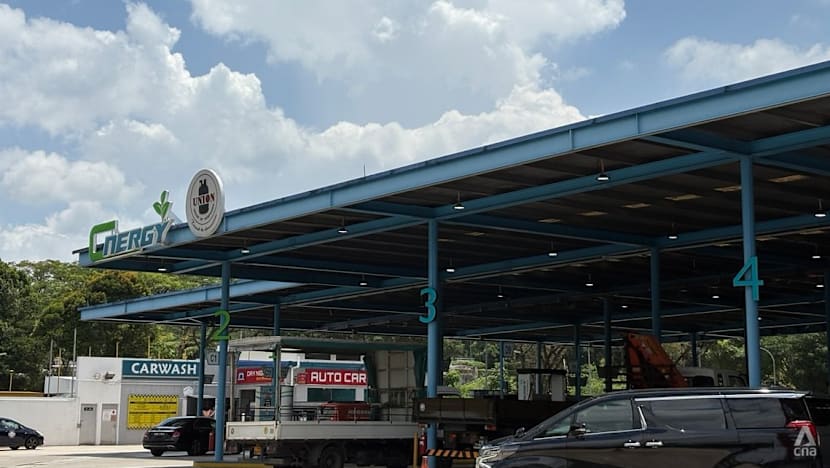
Vehicles at Cnergy Queensway petrol station on Mar 18, 2026. (Photo: CNA/Justin Tan)
New: You can now listen to articles.

This audio is generated by an AI tool.

19 Mar 2026 02:07PM
(Updated: 20 Mar 2026 11:46AM)
SINGAPORE: Regulars and first-time customers continued to flock to Cnergy outlets around Singapore despite an increase in prices on Wednesday (Mar 18).
Over the weekend, long queues were spotted at Cnergy outlet at Dunman Road, where member prices for 95-octane fuel and 98-octane fuel were S$2.35 (US$1.83) per litre and S$2.65 per litre respectively.
The company raised those prices by 5 cents a litre from Wednesday, with signs around Cnergy’s outlet at Old Toh Tuck Road notifying customers of the increase. Diesel prices remained at S$2.70 per litre.
In comparison, drivers likely pay between S$2.70 and S$2.75 per litre of 95-octane fuel at Caltex, Esso, Shell, Sinopec and SPC after taking credit card discounts and relevant loyalty programmes into account, according to Motorist SG price tracker.
Before discounts, Caltex, Esso, Shell and Sinopec are charging S$3.47 per litre for 95-octane fuel and SPC is charging S$3.46 per litre.
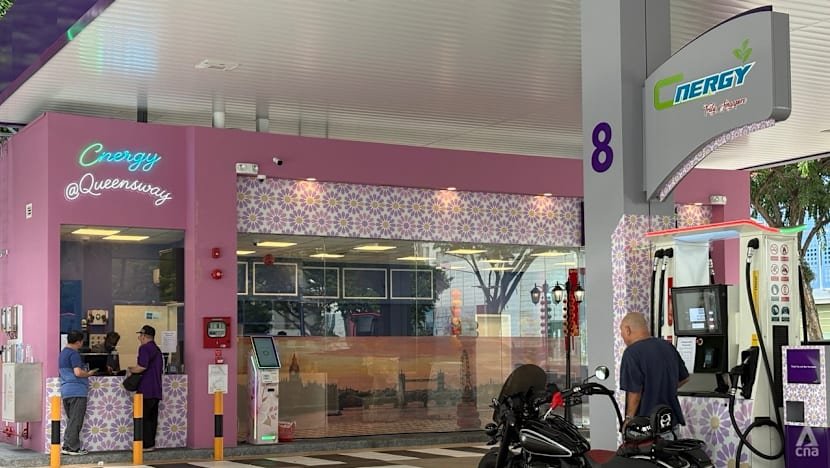
It costs S$5 to be a Cnergy member. Cnergy has three outlets: besides Dunman Road and Old Toh Tuck Road, the third is at Queensway.
Cnergy is owned by Union Gas Holdings. Mr Teo Hark Piang, chief executive officer of Union Gas Holdings, said Cnergy has seen a high number of new sign-ups from private-hire vehicle drivers in recent days.
There has also been a significant increase in the number of taxis at Cnergy pumps, he added.
“As a homegrown company, we hope to do what we can to help the local motoring community cope with rising petrol prices during this period,” he said.
LONG QUEUES
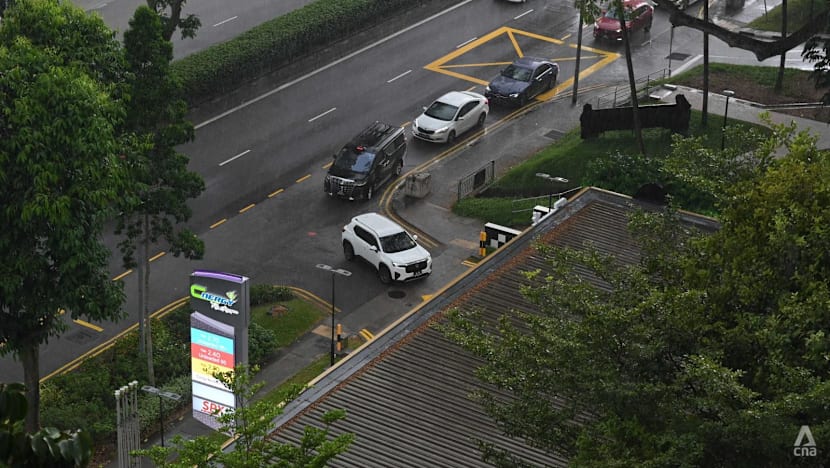
Over the weekend, a long line of cars stretched outside Cnergy’s outlet at Dunman Road, past the entrance to Carpmael Road and a nearby bus stop.
With prices still competitive on Thursday, CNA saw 17 cars lining up at the same outlet at around 11.30am.
On Wednesday, at least 15 cars were seen waiting to enter the station at Queensway at around 1.30pm.
MP Goh Pei Ming (PAP-Marine Parade-Braddell Heights) said on Facebook that the sudden surge in vehicles and increased honking along Dunman Road has caused inconvenience and frustration to residents, pedestrians and motorists.
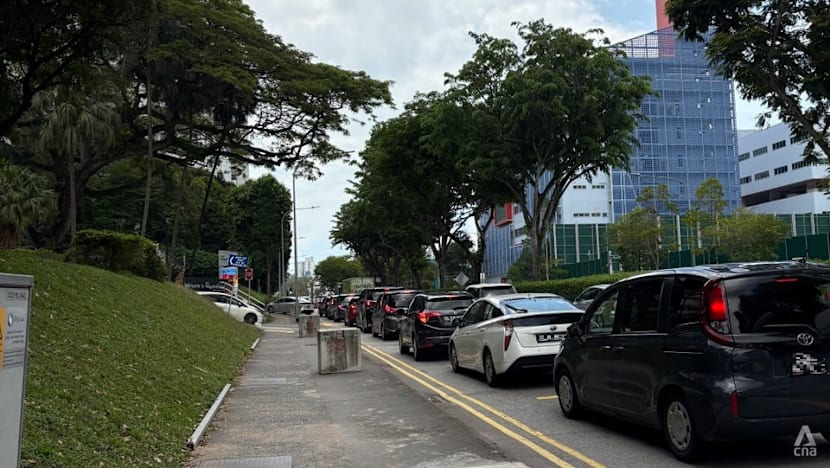
He said the Land Transport Authority has drawn yellow box markings and expanded a bus bay to keep junctions clear and improve traffic flow along the main road.
LTA was also arranging for auxiliary police officers to be deployed to help with traffic flow.
Another MP for the constituency, Ms Diana Pang, also said she has received feedback about the traffic congestion. She urged road users to keep to traffic regulations and exercise patience.
Petrol prices in Singapore have shot higher following the conflict in the Middle East, with pre-discount prices rising nearly 60 cents per litre, according to data compiled by Motorist SG.
A Shell spokesperson told CNA that it offers a range of fuel savings and loyalty programmes, including through partnerships with banks, SAFRA and Home Team NS.
“These have been in place to provide customers with consistent value regardless of market conditions,” the spokesperson said, adding that programmers are reviewed regularly to ensure they remain relevant.
CNA has contacted other petrol station operators for comment.
EVERY DOLLAR COUNTS
One driver, Ms Sarah Cheong, said she usually buys petrol from SPC, but read news reports about Cnergy’s lower prices.
She happened to be near the Toh Tuck outlet for work and found that the queue was not too long around lunchtime.
“If it was too long, I would probably have given up,” she said.
She paid S$97.37 for close to 40 litres of petrol, which would have cost around S$108 at SPC.
Before the conflict in the Middle East happened, she said fuel prices were manageable and she did not consider switching to Cnergy.
However, she now expects daily essentials as well as travel costs to increase. “Saving every dollar that I can save,” she said.
A personal driver who gave his name as Kenny also said the higher petrol prices drove him to try Cnergy.
He refuels his car around three times a week and used to be an Esso customer before visiting Cnergy at Queensway on Wednesday for the first time.
Several other customers told CNA that they had already been purchasing petrol from Cnergy before the attacks on Iran.
Mr Riduan Chumadi, who works in the energy industry, said he discovered the brand because he drove by one of the outlets near his home.
Queues have been getting longer in recent weeks, he said, but added that the outlet at Toh Tuck was bigger and could accommodate more vehicles.
PRICE WAR?
Despite losing some customers to Cnergy, other petrol station operators are unlikely to be pressured into matching their prices, said Mr Edmund Koo, a senior lecturer at Nanyang Technological University’s business school.
He said there are other tangible benefits, such as member loyalty schemes, and intangible considerations, such as convenience and perceived product quality.
Asked how an operator might be able to keep prices low, Mr Koo said it may have hedged its raw material purchase before the war or have an existing comfortable gross profit margin.
“Nevertheless, any business operator would take the opportunity to increase revenues if market conditions are ripe for the taking,” he said.
Lower prices by an operator could be sustained for three to six months, he added, but the long-term energy cost uptrend remains.
Cnergy could also be willing to let the increased costs eat into their profit margins for purposes of marketing and brand awareness, said Mr Koo.
“Since it only has three branches, any ‘loss’ is limited compared to brand names with large networks,” he added.


 English