



Based in the Motor City, Carl Anthony is the Automotive Lead at How-to-Geek and the host of AutoVision News Radio, a podcast that focuses on future vehicle technology, including next-generation ADAS innovations, electrification, and software-defined cars.
A broadcaster by nature, he has appeared on popular podcasts and radio shows, including Wrench Nation, Cars Yeah, The Car Doctor, and Digital PR Explained. Carl’s frequent appearances on MotorMouth Radio (WHPC 90.3 FM) over the last decade have made him a trusted resource for car enthusiasts, while his hosting of the AutoSens Insights series continues to spotlight the latest automotive technologies.
Prior roles include serving as a new vehicle launch and dealer trainer for Ford, Honda, Mercedes-Benz, and Volvo. Carl was a senior product specialist on Chevy’s National Truck Team, an experiential marketing program that travels the United States, and a respected member of the FCA (now Stellantis) national auto show team, where he served as the resident expert for consumers on the Dodge Charger and Challenger.
Before the automotive industry, Carl was a disc jockey, producer, and programmer at several popular Midwest radio stations, including KIWR, KEZO, KJAN, and KELO-FM. He is a graduate of Iowa Western Community College in Council Bluffs, where he dual-majored in the Electronic Media studies program, earning an Associate of Applied Sciences degree in both radio and television broadcasting.
Sign in to your How-To Geek account
Buying a used vehicle always comes with its share of unknowns, but when you add a high-voltage battery, a complex braking system, and a more expansive warranty to the mix, things can get a little more confusing. While a well-maintained hybrid can easily cruise past the 200,000-mile mark, the hidden costs of a neglected one can erase any potential fuel savings.
Whether you’re a first-time hybrid shopper or a long-time Prius fan looking for an upgrade, here are five important things to consider before you sign the paperwork and take the keys.
5
Battery state of health
Smartphone apps can help
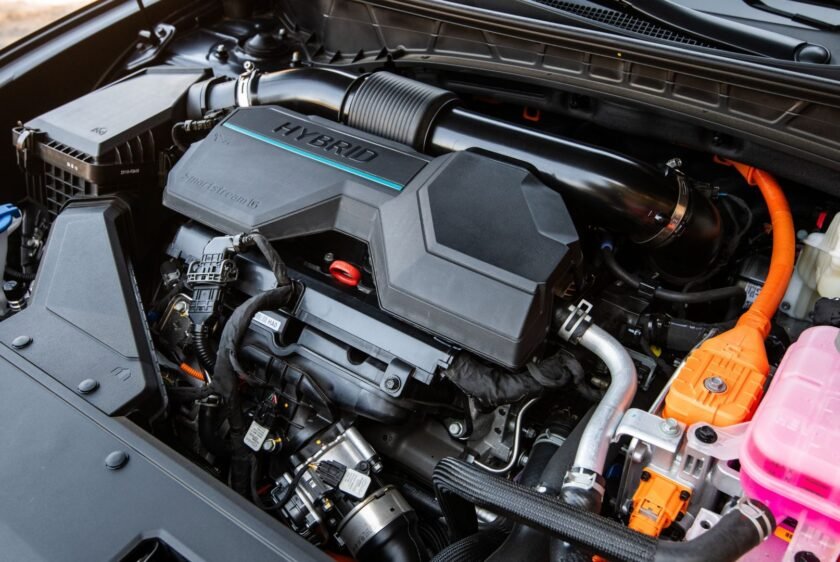
We’ve all been trained to look at the odometer first when buying a pre-owned vehicle, but in a hybrid, 100,000 miles on the clock may matter less than the battery pack’s remaining life.
Like a smartphone or any other consumer device you use regularly, there may come a time when the battery doesn’t hold a charge as well as it used to. It’s a similar principle here with a pre-owned hybrid. Before you buy, ask the dealer for a State of Health (SOH) report. An ideal SOH figure should be above 80%.
At this level, the battery can still assist the engine properly, keeping your fuel economy up and the transition between gas and electric power seamless. Once that rating dips below 70% on average, you’ve hit what many manufacturers consider the end of its usable service life. At this stage, the battery struggles to hold its charge, forcing the gas engine to run more frequently. In addition to a loss in gas mileage, you’re now one bad heatwave away from a total system failure and an expensive replacement bill.
If you’re looking at a Toyota or Lexus hybrid specifically through a third-party seller, and they don’t know the battery SOH, grab a Bluetooth OBD-II scanner and an app like Dr. Prius, which has an overwhelmingly positive reputation for accuracy.

The different types of hybrid powertrains explained
Not all hybrids work the same way—here’s a simple guide to the different types of hybrid powertrains and how they differ.
4
Find the warranty “sweet spot”
CARB rules may work to your advantage
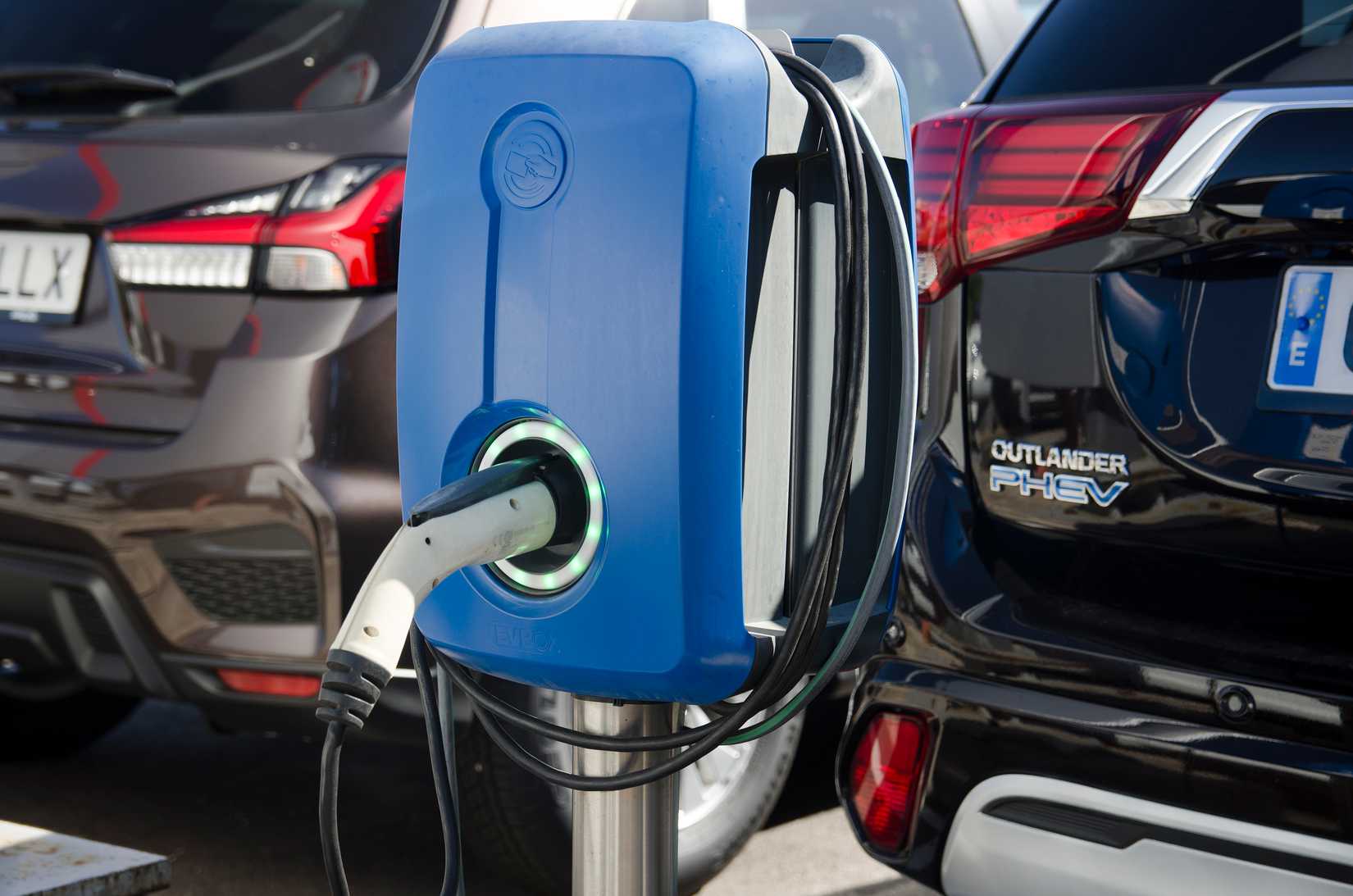
Hybrid system components often carry longer warranties than the rest of the vehicle. Most are covered for eight years or 100,000 miles, though some makes and models may offer warranties that extend up to 10 years or 150,000 miles.
The warranty “sweet spot” for a pre-owned hybrid is a vehicle that is four to six years old. In this age range, most depreciation has already occurred, and you still have a safety net with remaining factory coverage should the inverter or battery pack fail.
If you live in a CARB state (California Air Resources Board) that follows California’s stricter emissions rules, some hybrids, specifically those certified as transitional zero emission vehicles (TZEV), may carry a mandatory 15-year or 150,000-mile warranty on emission-related parts.
In addition to California, CARB states as of 2026 include Oregon, Washington, New York, Massachusetts, Vermont, Colorado, New Jersey, Delaware, Rhode Island, New Mexico, Maryland, Connecticut, Virginia, and Pennsylvania.
3
Listen to the brake transition
Find a quiet parking lot
Hybrid braking can feel different, especially if it’s your first time taking one for a test drive. When you step on the brake pedal, hybrids will actually use an electric motor to slow down first before the brake pads. In a hybrid, this is the difference between regenerative and mechanical (i.e., traditional) braking.
In a gasoline-only vehicle, traditional braking creates friction between the pads and rotors, converting motion or kinetic energy into heat. That heat disappears into the air and is, for all intents and purposes, lost.
With a hybrid vehicle, the electric motor serves a dual purpose, helping recover energy that would otherwise be lost. While driving normally, the electric motor helps propel the wheels forward, but when you slow down, it acts as a generator, converting the otherwise wasted energy and sending it back to the battery to recharge it.
During your test drive, find a quiet parking lot or a stretch of road and practice slow, smooth stops. You’re listening for any odd or strange sounds or feeling for a “lurch” when the car switches from regenerative to mechanical braking. If you feel a “grabby” sensation, hear clicking, or notice a delayed response when the normal brakes finally kick in, it could indicate a failing brake actuator, a specialized part that can cost a small fortune to replace.
Once you purchase a hybrid vehicle, take some time to master the process of regenerative braking, as your fuel savings will add up over time.

Milwaukee M12 FUEL Combo Kit
- What’s Included
-
M12 impact driver, hammer drill, 3/8-inch ratchet, charger, two batteries
- Warranty
-
5-year warranty on tools, up to 3-year warranty on batteries.
- Cordless?
-
Yes
If you’re looking for a great DIY starter kit from Milwaukee, this M12 3-tool combo kit is it. With an impact driver, hammer drill, and 3/8-inch ratchet, along with a 4Ah and 2Ah battery, this kit is a great starting point for projects both at home and on your vehicle.
Hybrid battery fan filter can be easy to forget
Hybrid batteries generate heat during charging and discharging. To stay cool, they pull air from the cabin through a dedicated intake vent, which is why it’s important to ask about the hybrid battery fan filter.
- Where to find it: You will likely find this vent near the rear seats or along the plastic trim by the floor. It looks like a small plastic grate.
- What to look for: Pop that vent cover off (it usually just clips out) and inspect the mesh filter behind it. If the previous owner had pets that shed or frequently drove with the windows down in dusty areas, this filter may have a layer of debris. When this happens, the battery essentially suffocates.
- Potential risk factor: Because the battery can’t breathe, it operates at higher temperatures, increasing the risk of premature cell failure and a costly repair bill.
A clogged filter can also force the cooling fan to run at higher speeds, which can be detrimental over time. If you hear a whirring sound coming from the back seat during your test drive, it’s possible the filter has been unaddressed for a while.
If the hybrid vehicle is out of warranty, a full battery replacement may run between $2,000 and $5,000 at an independent shop, while a dealership may charge upwards of $8,000.

10 Used Hybrid Vehicles That Are Solid Investments
These 10 used hybrid vehicles offer reliability, efficiency, and strong resale value, making them smart long-term investments.
1
12-volt battery
Might not be under the hood
The biggest headache with a used hybrid isn’t always the main battery. It’s the standard 12-volt battery that runs the lights and computers.
Because these batteries don’t “crank” an engine like a normal vehicle, they can quietly go bad. Ask the dealership for the service records. If the 12-volt battery hasn’t been replaced in the last four years, insist on a new one as part of the deal. A failing 12-volt battery can trick the car’s computer into issuing phantom system failure warnings that are actually false alarms.
The 12-volt battery in a hybrid might be located in the trunk or under the rear seat, not necessarily under the hood. Most modern hybrids use AGM batteries, or Absorbed Glass Mat batteries, which offer a number of benefits, including longer service life.
Use these tips to your advantage
Ultimately, your goal during the buying process isn’t just to find a hybrid with a low price tag, but to find one with a documented history of consistent maintenance. While talking with the dealer or seller, ask lots of questions and trust your instincts on the test drive. Use the tips above to help you, and hopefully, you will find a pre-owned hybrid that becomes one of the best car-buying decisions you have made.


 English