
kungfu01/Shutterstock
A battery that keeps its charge for decades is likely the fantasy (whether conscious or unconscious) of more than a few people in this digital age. Devices have made life more convenient, more entertaining, and more productive, but the need to keep these tools and toys charged up is an undeniable drawback. While there are ways to optimize your phone’s battery life, there’s no way to prevent it from draining entirely.
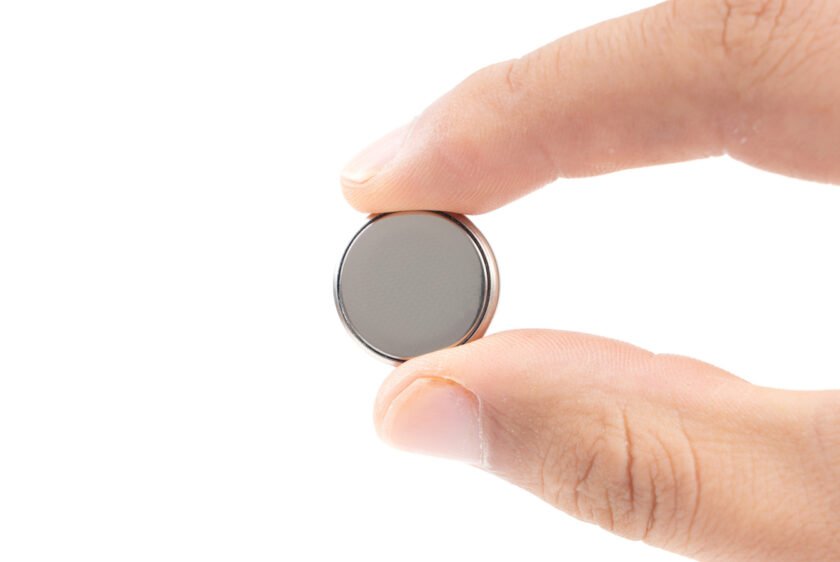
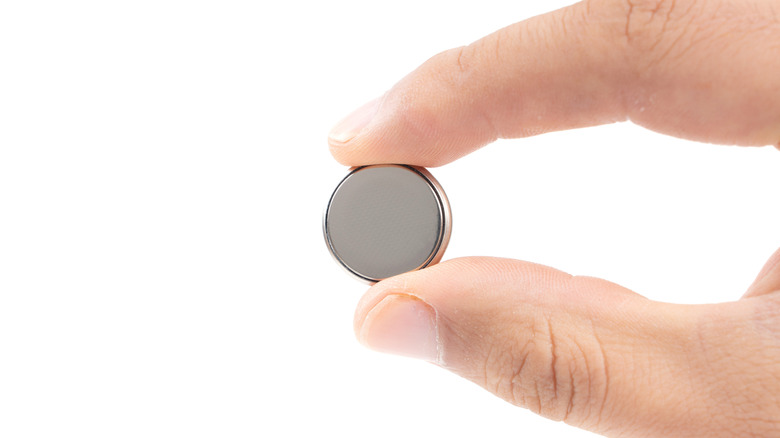
However, a team of scientists in China may have achieved a breakthrough that could someday make this reality of digital life a thing of the past. According to a January 2024 story from World Nuclear News, the company Beijing Betavolt New Energy Technology Company Ltd claims to have invented a “nuclear battery” that uses atomic energy to generate electricity. Betavolt claims this type of battery could continuously supply electricity for up to 50 years without needing to be replaced. It’s also remarkably small, making it a useful and versatile option for a range of potential applications. Yes, that (possibly) includes making it so you never have to worry about charging your phone ever again.
China and U.S. develop early nuclear batteries

Andrii Yalanskyi/Shutterstock
Nuclear isotopes release energy when they decay and semiconductor converters can harness this energy to convert to electricity. This is how a nuclear battery works. According to Betavolt, the company’s team of scientists has created a small nuclear battery specifically using a nickel-63 isotope. They also created a thin diamond semiconductor to facilitate the process of generating electricity from the isotope’s natural decay process.
The result? If Betavolt’s scientists have achieved what the company claims, they’ve theoretically created a long-lasting battery that can supply power for decades. Such a battery would have a range of potential applications across numerous industries, from AI to aerospace, and at least one U.S. company, California’s Infinity Power, may have taken notice.
Per another World Nuclear News story, Infinity Power has also developed a nuclear battery with support for the U.S. Department of Defense. The company claims its particular energy conversion approach “marks the highest level of overall efficiency ever achieved.” According to Infinity Power, its “tiny coin-cell-style device can provide tens of milliwatts of power for over 100 years.”
Nuclear batteries aren’t the only new types of batteries that could change tech
IM Imagery/Shutterstock
Betavolt claimed it planned to release its first one-watt battery in 2025, but that didn’t happen. Aside from the initial 2024 reports, there hasn’t been much news on nuclear battery innovations from either Betavolt or Infinity Power. That doesn’t mean these companies (and others) aren’t still working on these solutions. It could simply mean they were a little over-optimistic regarding how much time it would take to turn their experimental prototypes into products.
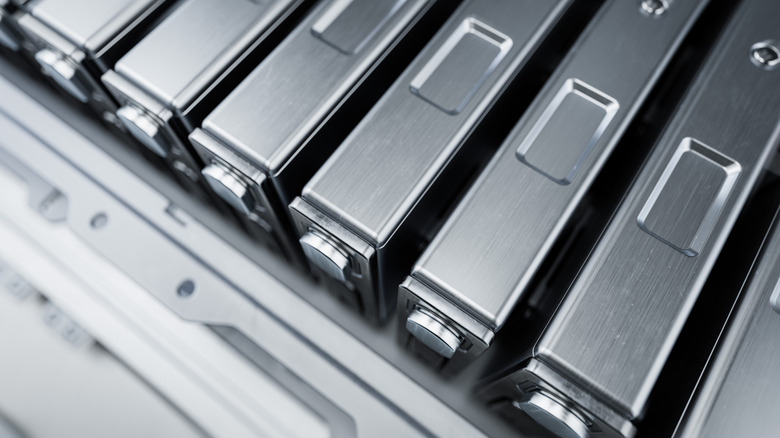
In addition, nuclear batteries by no means represent the only breakthroughs being made in battery technology. For example, researchers have just developed a groundbreaking type of technology for a sulfur battery that could be more sustainable than lithium-ion batteries. Meanwhile, another team in China has made strides with thermal batteries, serving as a reminder that this type of development seems to be a priority in China. Others who want to join in on what could be an energy revolution should pay attention.


 English