

Haley Zaremba
Haley Zaremba is a writer and journalist based in Mexico City. She has extensive experience writing and editing environmental features, travel pieces, local news in the…
More Info
Set us as your preferred Google source
Premium Content
By Haley Zaremba – Apr 30, 2026, 4:00 PM CDT
- China produced over 80% of the world’s lithium-ion batteries in 2025 and controls roughly 90% of the energy storage battery market — a consolidation that creates serious supply chain and geopolitical risks for the West.
- Chinese researchers have developed an all-iron flow battery with a record-breaking 6,000-cycle lifespan — equivalent to 16 years of operation with zero degradation — at a fraction of lithium’s cost.
- Iron is roughly 80 times cheaper than lithium in today’s market, and the new electrolyte breakthrough could make iron batteries scalable, potentially reshaping global energy storage.
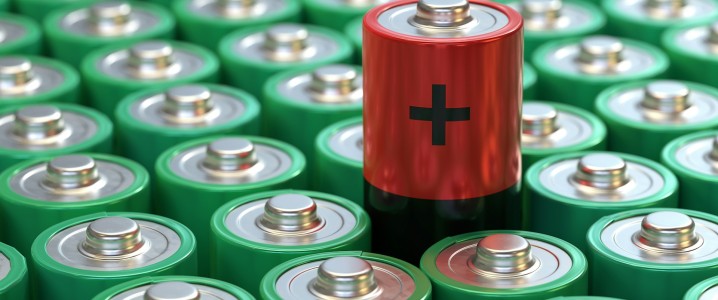
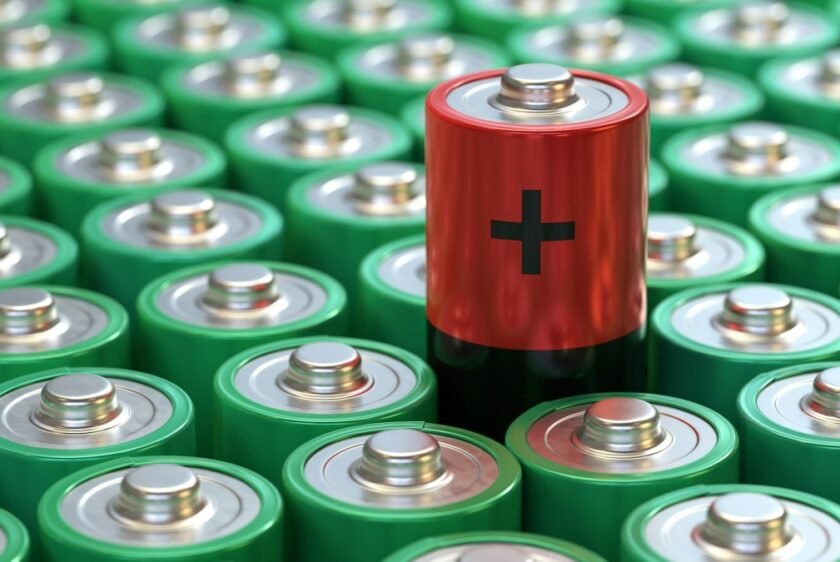
Major innovation is needed to diversify the global battery sector. Lithium-ion batteries are taking over the world – you probably have a few within reach at this very moment in your rechargeable devices. And since China controls the world’s lithium supply chains and dominates global lithium-ion battery manufacturing, the global tech sector has become dangerously consolidated. Breaking this dependency on China will require breaking our dependency on lithium, creating a dire need for the development of viable alternative battery technologies.
The lithium-ion battery sector has gone gangbusters in recent years, skyrocketing by 20 percent between 2024 and 2025 to reach a global market of USD 150 billion. But as the strength of the lithium-ion market has increased, so too have the considerable supply chain risks and geopolitical insecurities associated with the sector. China alone produced over 80 percent of all the world’s lithium-ion batteries in 2025.
“For over a decade, China has meticulously orchestrated a strategic ascent in the global electric vehicle (EV) batteries market, culminating in a dominance that now presents a formidable challenge to Western manufacturers,” the EE Times reported last year. China also dominates batterymaking for the energy storage sector, which is currently 90 percent dependent on lithium-ion batteries. This consolidation acts as “almost a moat” protecting the Chinese battery sector from international competition.
In addition to its geopolitical risks, lithium also has other logistical and strategic pitfalls. Its extraction is highly environmentally unfriendly and can pose risks to public health, for one thing. And while lithium is energy-dense and performs well in a wide range of conditions, it’s not optimal for energy storage – a massively expanding market. Lithium-ion batteries can only hold onto charge for about four hours at a time, whereas energy storage needs to offer long-term solutions for energy security as more and more variable energies like wind and solar power connect to the grid.
Set OilPrice.com as a preferred source in Google here.
There is therefore a critical opening for alternative battery models that can hold charge for longer, and which avoid lithium supply chains. And, perhaps unsurprisingly, China is leading the charge for the development of these alternative battery models as well. Just this week, Interesting Engineering reported that a Chinese team has made a major breakthrough in advancing “all iron” flow batteries which could provide an affordable option for long-term energy storage. “It provides a budget-friendly, high-endurance answer for the world’s massive energy storage needs,” says Interesting Engineering.
The breakthrough comes thanks to a new electrolyte which allows for thousands of recharge cycles at a much lower cost than lithium-ion batteries. “The development solves the long-standing issues of material degradation and leakage (crossover) by re-engineering the iron complex at the molecular level,” the report goes on to say. This could majorly upset battery markets if the model proves scalable, as iron is about 80 times cheaper than lithium in today’s market.
By tweaking the iron at a molecular level, the Chinese research team has managed to solve several critical challenges for the energy storage sector. Typically, these kinds of batteries degrade quickly. But this new approach grants the battery a record-breaking lifespan. Testing showed that the battery could withstand the equivalent of 16 years of operation with zero degradation.
“After multiple rounds of screening, the AIFB adopting the [Fe(HPF)BHS]?4− anolyte exhibits a record-breaking ultra-long cycling stability over 6000 cycles at 80 mA cm−2,” detailed the study, published earlier this month in the scientific journal Advanced Energy Materials.
This breakthrough is just one of many alternative battery models being developed within and outside of China. The range of approaches is massive and diverse, with models as futuristic as quantum batteries and as low-brow as dirt batteries. While many of these prototypes are being piloted far from Beijing, the Chinese sector is majorly out-spending the rest of the world on clean energy development, making Chinese developers and manufacturers hard to compete with.
By Haley Zaremba for Oilprice.com
More Top Reads From Oilprice.com
- Tankers Move from Fuel to Crude Trade as War Upends Flows
- JP Morgan: UAE Could Attract More U.S. Investment After OPEC Exit
- Strait of Hormuz Fears Send California Gas Past $6 a Gallon
Download The Free Oilprice App Today


Back to homepage
Haley Zaremba
Haley Zaremba is a writer and journalist based in Mexico City. She has extensive experience writing and editing environmental features, travel pieces, local news in the…
More Info
Related posts
Leave a comment


 English