
To make sure this predator stays lethal, the battery power needs to be carefully managed.
The question “BYD Shark against who?” along with a picture of the bakkie kicking up dirt parades on billboards all around town.
After spending some time in the bakkie recently, we have a question of our own. “With or without a charged-up battery?”
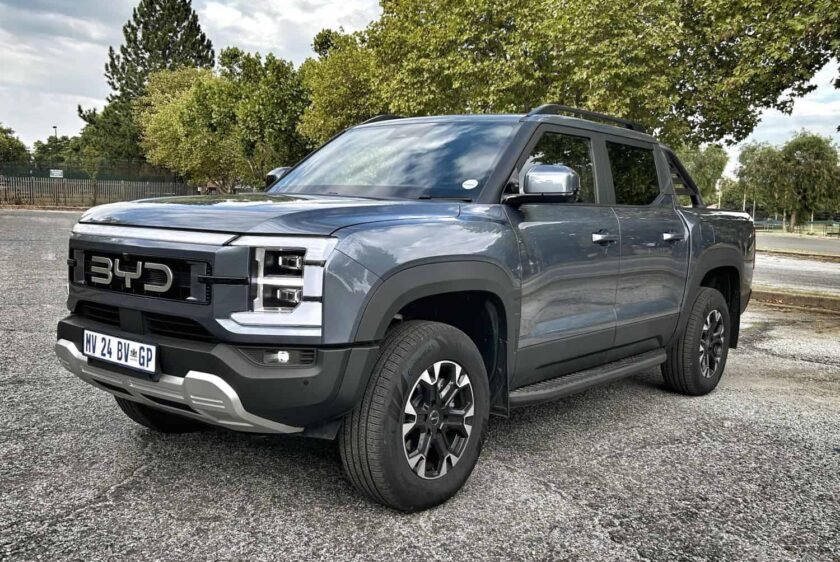
The BYD Shark was introduced last year as South Africa’s first plug-in hybrid (PHEV) bakkie. It is powered by a combination of a 1.5-litre petrol engine and two electric motors hooked up to a battery pack.
ALSO READ: BYD Shark dethrones Ford Ranger Raptor as fastest bakkie in SA
BYD Shark king of bakkies
When the 29.58kWh lithium iron phosphate battery is charged, the bakkie is every bit as lethal as its aquatic namesake. By clocking a 0-100km/h sprint time of 5.66 seconds during our test last year, it dethroned the Ford Ranger Raptor (6.9 seconds) as Mzansi’s fastest production bakkie. For not having a rival in sight on the drag strip, we’ll allow the BYD marketers their bullish billboard approach.
But to hunt down Raptors with the regularity of a marine predator, the BYD Shark needs battery power. Once the battery starts running low and the bakkie becomes more reliant on its petrol mill, it’s not the deadliest of weapons anymore. Still faster than most lethargic four-cylinder diesel bakkies, but not an undisputed drag strip king.
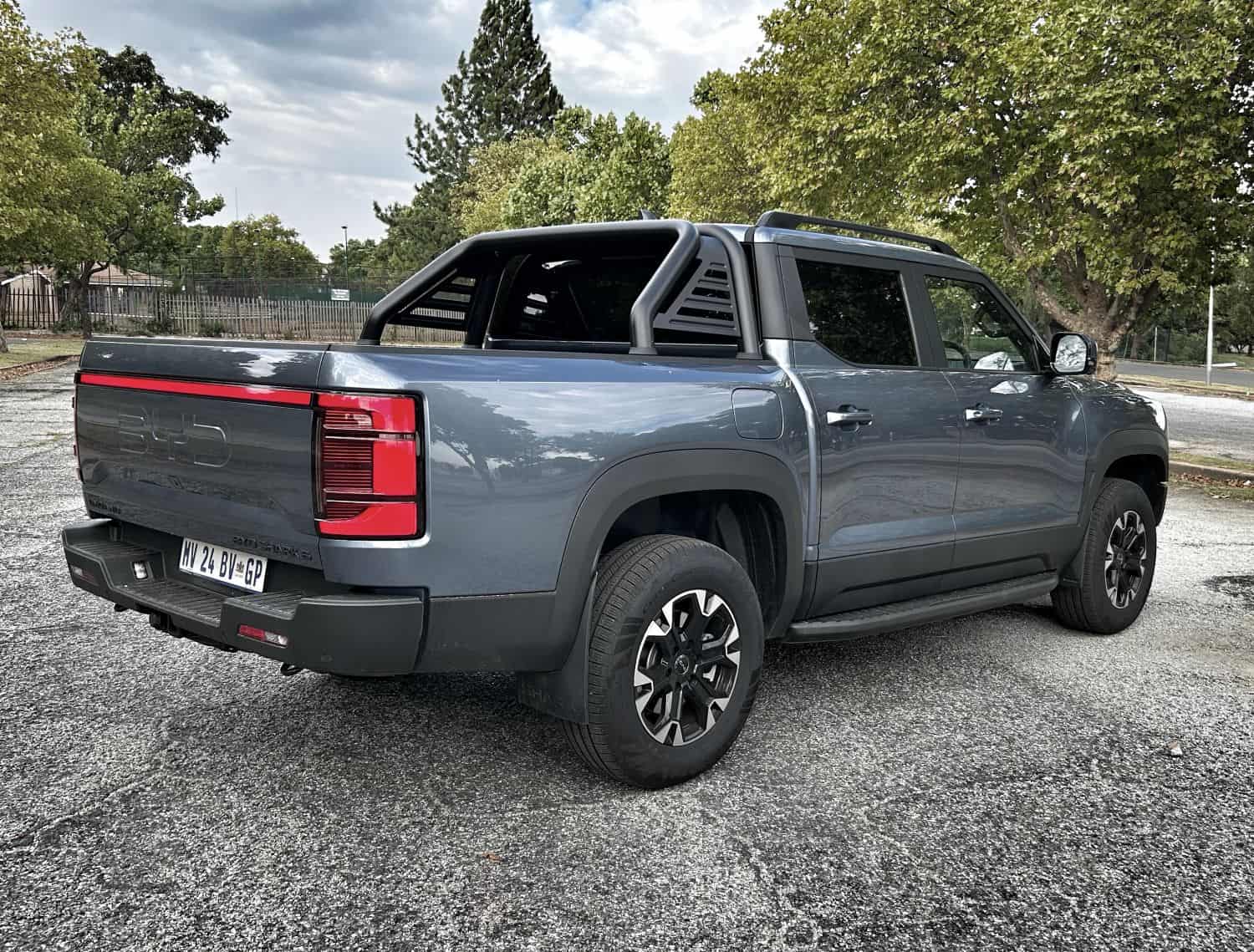
Trying to explain exactly what goes down under the bonnet in a hybrid is not all that easy. In fact, not even BYD themselves have explained this to us in much detail.
Petrol meets electrical power
What we do know is that the bakkie’s petrol mill makes 135kW of power and 260Nm of torque. A front axle-mounted electric motor produces 170kW/310Nm, and a rear axle-mounted motor brings another 150kW/340Nm to the party. BYD rates the combined power at 321kW/640Nm, which already tells you it’s not as straightforward as merely adding the numbers up.
When you floor the Shark in EV mode with a full battery, it is easy to imagine that the full instant 320kW of the two electric motors is at play. It is so brutal off the line that you’ll never guess the monstrosity weighs all of 2 710kg. But because the bakkie is a PHEV and not an EV, its pure-electric range is rated at around 100km. Even less, depending on how many Raptors you’d picked off since charging.
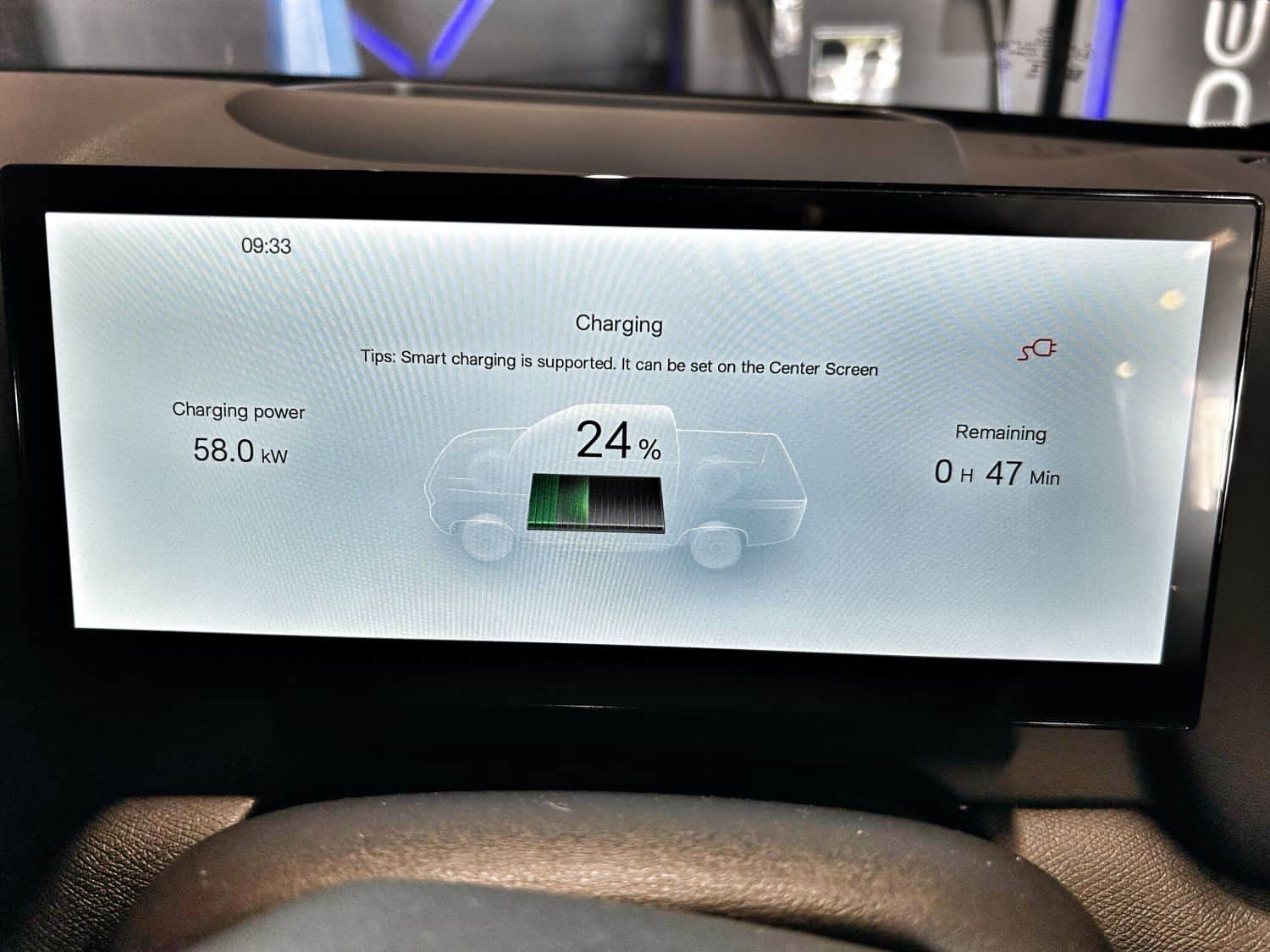
If you can’t make it to a DC charger, which charges the BYD Shark from 20 to 80% in less than 30 minutes, or charge it at home overnight, you can prolong your fun in hybrid electric vehicle (HEV) mode, providing you manage the energy system.
Managing the battery’s power
BYD provides the option of selecting a target percentage of between 25 and 70% of what it calls the battery’s “State of Charge (SOC)”. By activating the SOC, the battery management system does not allow the power level to drop below the selected percentage. To achieve this, engine power is applied to keep the battery at the desired level.
ALSO READ: BYD Shark dethrones Raptor – 2025 Motoring Newsmaker No 7
And except for the engine noise erupting from stomping on the accelerator, the BYD Shark still behaves very much like an EV when operated like this. It almost feels like the engine is used more as a generator to power the electric system than to contribute to the drive itself. This is how a range-extending electric vehicle or REEV works.
The downside to this is that the engine needs petrol to keep the battery at its set level. How much? We can’t tell you, as the Shark doesn’t exactly tell you.
The third way to operate this bakkie is the one the billboard does not want you to know. This happens when you have depleted the electric range without activating the SOC. BYD also calls this HEV mode, but a very different one from before.
ALSO READ: PODCAST: How long can BYD Shark stay SA’s fastest bakkie?
BYD Shark gets lethargic
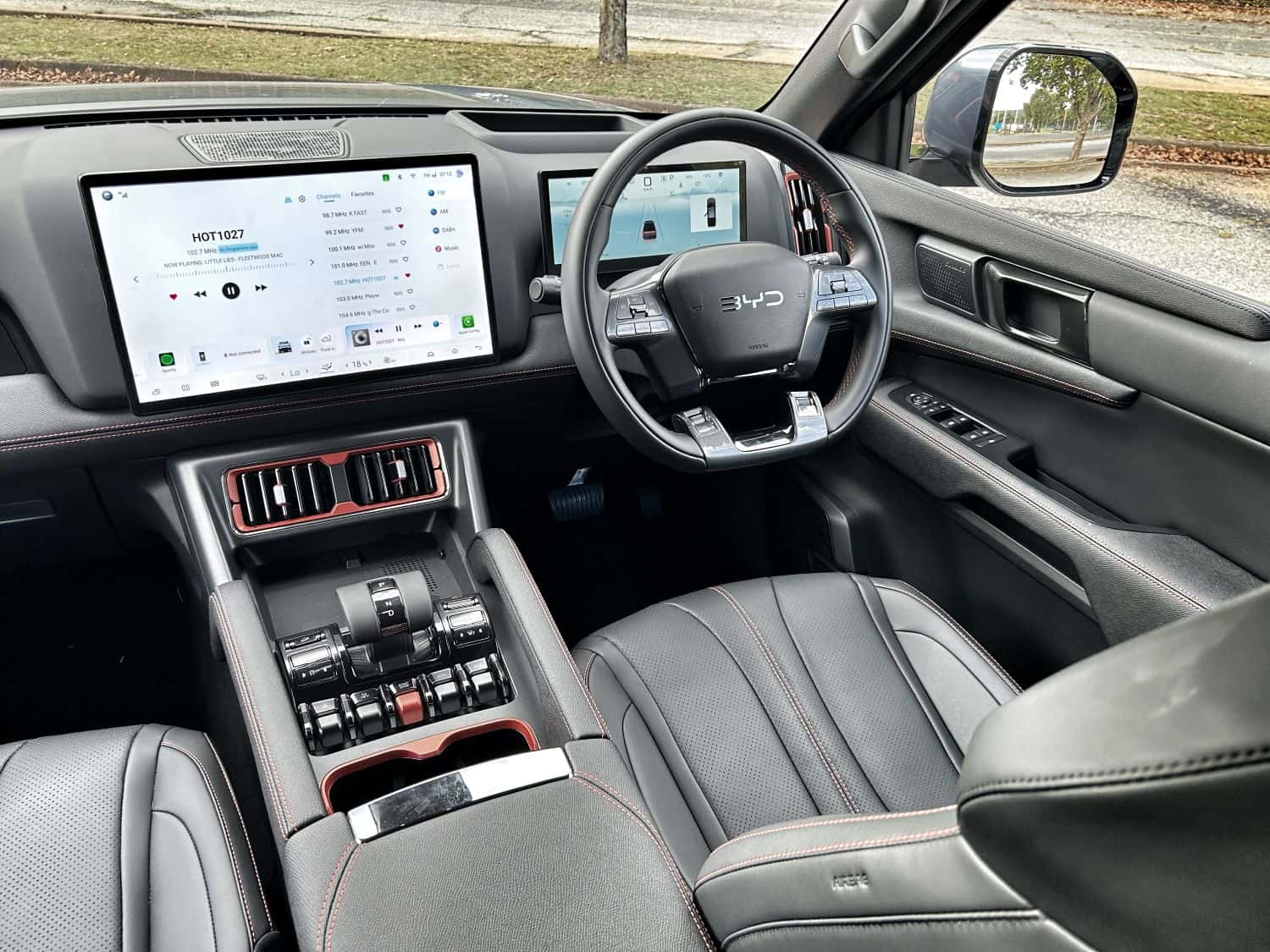
Now the petrol engine powers the bakkie with some electrical assistance similar to a self-charging hybrid. In this case, the battery level always stays around the 20% mark. But by now the light-footed EV soul is a distant memory, and all you are left with is a heavy and noisy bakkie which feels underpowered. It will get you from point A to point B just fine and take you on open road trips without any range anxiety, but this is not what you signed up for when you saw the billboard.
Our conclusion is that the BYD Shark is every bit the predator it is advertised as. It accelerates like a beast while keeping its occupants comfortable in a very plush and technologically advanced cabin. And its R959 900 price is very competitive in the bakkie game.
But to make the most out of it, you will need to be mindful of managing the energy flow. The last thing you want is being caught with your pants down against a Ford Ranger Raptor. Heaven forbid that should happen in front of the billboard.
Support Local Journalism
Add The Citizen as a Preferred Source on Google and follow us on Google News to see more of our trusted reporting in Google News and Top Stories.


 English