

Felicity Bradstock
Felicity Bradstock is a freelance writer specialising in Energy and Finance. She has a Master’s in International Development from the University of Birmingham, UK.
More Info
Set us as your preferred Google source
Premium Content
By Felicity Bradstock – Feb 28, 2026, 10:00 AM CST
- Around 730 million people lacked electricity access in 2024, with sub-Saharan Africa accounting for the vast majority of the deficit.
- Companies such as BP and MOPO are deploying rental battery models powered by solar charging hubs to provide affordable, short-term electricity access.
- While not a substitute for grid infrastructure, battery rental systems reduce diesel reliance and support small businesses until long-term energy investments materialize.
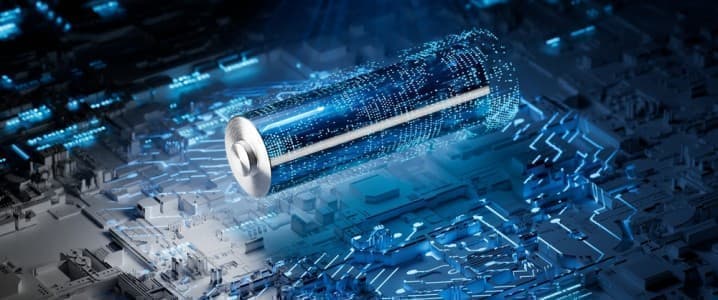
There are still many areas of the world where people do not have access to electricity, due to a lack of funding for the necessary transmission infrastructure and several other challenges. Now, some countries are tackling the issue by investing in programmes to support battery rental. By allowing those without access to power to rent batteries, which helps provide a mid-term solution to the lack of power, until long-term infrastructure can be developed.
Approximately 730 million people worldwide did not have access to electricity in 2024, marking a decrease of just 11 million from 2023, according to the International Energy Agency (IEA). Access to electricity is much lower in some parts of the world than in others, such as in many sub-Saharan African countries, where population growth continues to outpace electrification. Debt burdens driven up by the Covid-19 pandemic, and cuts to aid investment, have hindered progress in several regions.
Developing Asia achieved an access rate of 98 percent in 2024, with India and Indonesia reporting universal access. The remaining gap is largely concentrated in Pakistan, Afghanistan, Mongolia, Myanmar, and the Democratic People’s Republic of Korea.
Universal access has almost been achieved in Latin America, although some remote areas, such as the Andean Highlands and the Amazon, still do not have the infrastructure required to supply electricity. In addition, there is still a significant access gap in Honduras and Haiti.
However, progress in enhancing access remains slower in sub-Saharan Africa, which account for eight out of ten people globally without electricity, according to the IEA. While progress has been made in Côte d’Ivoire, Kenya, and Mozambique, 27 countries in the region are still lagging behind the pre-pandemic rate of access expansion. However, investment in solar projects across several countries, mainly by China, is expected to speed up the deployment of clean electricity in the coming years.
Investments in clean energy projects and supporting transmission infrastructure signal a future with greater access to electricity in sub-Saharan Africa. However, it could take several years before many people get connected to the grid. In the meantime, governments and private companies are investing in alternative connectivity options to ensure that people are not left without electricity.
The energy company BP launched an initiative in South Africa in 2025 known as BPowered, offering daily rental batteries. The batteries range from 300 to 1,000 watt-hours and are capable of powering lights, televisions, laptops, and some appliances for several hours. This helps people to run businesses, such as convenience stores and hair salons.
Users can return the batteries to be recharged to use the following day. The batteries are distributed across businesses equipped with solar panels, such as petrol stations, where users can collect and return them easily. Roughly 200 million people across sub-Saharan Africa rely on solar power for electricity, according to the global association for the off-grid solar energy industry. BPower hopes to expand the programme to Nigeria.
Around a decade ago, the U.K.-based firm MOPO launched a similar programme, distributing around 125,000 rental batteries in Nigeria, the Democratic Republic of the Congo, Sierra Leone, Liberia, Chad, and Uganda. MOPO installed solar battery-charging stations in various communities where petrol stations and similar structures do not exist. While the batteries can generally provide users with regular access to power, they are not big enough to power large appliances and electronics. In 2025, the development finance institution Norfund invested $5 million in MOPO to expand its battery projects.
MOPO’s CEO, Chris Longbottom, stated, “We’re revolutionising access to energy… Our proprietary batteries and pay-per-use rental model are transforming energy for millions.” The company offers two battery options: the MOPO50, designed for lighting, phone charging, and DC appliances, and the more powerful MOPOMax, to replace fossil fuel generators or provide a battery swap for e-motorbike taxis. In October, MOPO achieved its 20th million battery rental milestone.
The rollout of battery projects in Africa can help reduce reliance on noisy and polluting diesel generators, which over 40 percent of businesses in Sub-Saharan Africa continue to rely on to keep the lights on. While diesel generators are cheap to buy, they are expensive to run and release large quantities of carbon dioxide. However, many people in sub-Saharan Africa cannot afford to invest in a battery of their own, which makes rental programmes extremely popular, boosting access to electricity in poor communities.
To achieve sustainable, universal access to electricity, governments and energy companies worldwide must invest in expanding the production capacity of a broad mix of energy sources and investing in the development of supporting transmission infrastructure. This will likely take several decades to achieve. In the meantime, battery rental projects can provide communities without access to electricity with the means to power basic devices to enhance living standards and help people run businesses.
By Felicity Bradstock for Oilprice.com
More Top Reads From Oilprice.com
- Britain Reconsiders 78% North Sea Oil Tax as Investment Slows
- Iran Rushes to Ship Oil Ahead of Possible U.S. Strike
- Russia to Tighten Budget Fiscal Rule as Oil and Gas Revenues Plunge
Download The Free Oilprice App Today


Back to homepage
Felicity Bradstock
Felicity Bradstock is a freelance writer specialising in Energy and Finance. She has a Master’s in International Development from the University of Birmingham, UK.
More Info
Related posts
Leave a comment


 English