
Electric vehicle owners in Victoria have been greeted by a frustrating sight recently. Instead of a high-powered DC connector ready to top up their battery, they are finding severed stumps of rubber and copper.
Evie Networks recently took to social media to highlight a string of attacks in the Dandenong area. The images shared by the charging provider show clean cuts through heavy-duty cables, rendered useless by thieves looking for a quick payday.
This isn’t just a minor inconvenience for a few drivers. It is a direct assault on the reliability of our national charging infrastructure and a significant financial burden on the companies building it.
High stakes at Dandenong
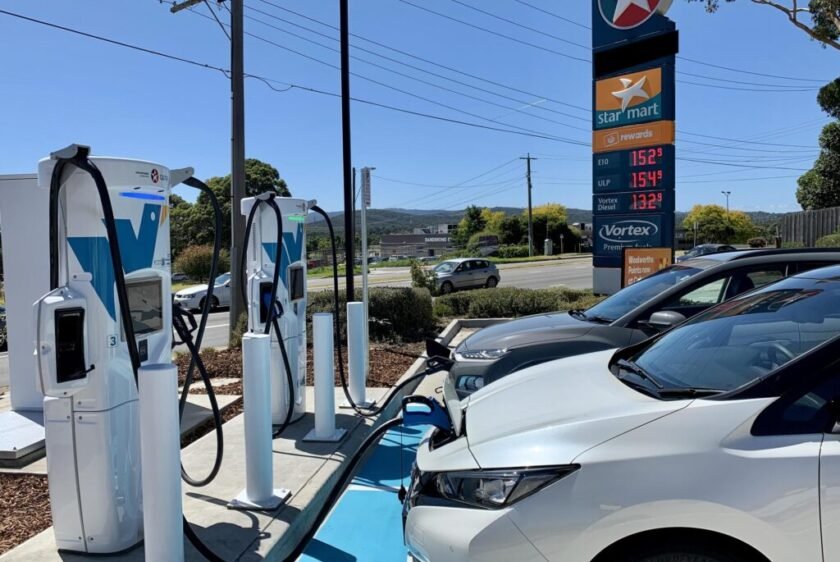
The specific site targeted is the Evie Networks station located at the Dandenong Woolworths on Princes Highway. This location is a critical piece of infrastructure for those moving through Melbourne’s southeast.
The site features two ultra-fast Evie 350kW DC chargers, which are among the highest-capacity units in the country. Both units, identified as HM007 Charger 1 and Charger 2, provide dual CCS2 and CHAdeMO plugs to ensure compatibility with a wide range of electric vehicles.
When these cables are severed, it doesn’t just disable one plug; it often takes the entire unit offline. For a driver arriving with 5% battery at a 350kW hub expecting a quick top-up, finding a dead charger can mean the difference between getting home and needing a tow truck.
Having reviewed the location, Corner Stud And, Heatherton Rd, Dandenong VIC 3175, Australia on Plugshare, the site is not remote, away from civilisation, it’s located at an Ampol service station, showing just how brazen the crime was.

The rise of the copper bandits
Copper prices have been hovering near record highs globally, making it a lucrative target for opportunistic thieves. In the eyes of a criminal, an EV charging station is essentially an unguarded vault of high-grade copper wire sitting in a car park.
While the damage to the charging station can cost tens of thousands of dollars to repair, the thief might only walk away with A$50 worth of scrap metal. This disparity between the cost of the crime and the value of the haul is what makes this trend so infuriating.
Evie Networks is now fighting back by trialling international solutions to protect their assets. They are testing a “cable guard” technology, which is a protective mesh designed to make the cables much harder to cut and less appealing to criminals.
Identifying the culprits with ink
One of the more interesting solutions being discussed in the EV community is a technology similar to what banks use during heists. Some cable protection systems can now spray a permanent, identifiable ink on anyone who attempts to breach the outer casing.
This forensic marking approach means that even if a thief successfully cuts the cable, they—and the stolen goods—are marked for weeks. It provides police with an undeniable link between the suspect and the scene of the crime.
“Making sure chargers are available when drivers arrive is what matters most to us. So, we’ve looked at what’s worked overseas and are now trialling cable guard technology at a handful of sites — a protective mesh designed to help prevent damage and reduce downtime.”
Evie Networks

A deadly risk for a small reward
Beyond the property damage, there is a terrifying safety element that these thieves are seemingly ignoring. These are not extension cords; they are high-voltage DC cables designed to carry massive amounts of energy.
Attempting to cut through a live 350kW cable with hand tools is an invitation for a catastrophic electrical arc flash. The potential for a life-altering injury or instant electrocution is extremely high for anyone foolish enough to try it.
The legal consequences are just as severe as the physical risks. In Victoria, theft and criminal damage can carry significant prison sentences, with additional penalties for interfering with essential public infrastructure.
Where is the copper going?
While physical protection on the cables is a necessary first step, it only addresses the symptoms of the problem. To stop the theft, we need to look at the “off-ramp” for these stolen materials: the scrap metal dealers.
In the world of finance and fintech, we often talk about KYC, or Know Your Customer. Banks and digital currency exchanges are legally required to verify exactly who they are doing business with to prevent money laundering.
It raises a glaring question for the metal recycling industry. If a person walks into a scrap yard with 20 kilograms of freshly cut, high-grade EV charging cable, why isn’t the alarm being raised immediately?
Implementing KYC for scrap metal
In Australia, many states have already introduced laws to ban cash payments for scrap metal. This was designed to create a paper trail, but clearly, the current system is not doing enough to deter the theft of public infrastructure.
We need to see a much more rigorous “Know Your Customer” framework applied to the metal trade. Every transaction should require a photo ID, a recorded vehicle registration, and a clear description of where the material originated.
If a scrap dealer cannot prove the provenance of the metal they are buying, they should be held legally liable. Until we remove the ease of turning stolen infrastructure into cold hard cash, the cables will continue to be cut.
The impact on providers and taxpayers
This site in Dandenong, like many across the country, was supported by government co-funding to accelerate the EV transition. When a site is vandalised, it isn’t just the provider’s private capital at risk; it is a waste of public investment.
Evie Networks must foot the bill for expensive emergency repairs, often involving specialized technicians and custom-ordered parts. These costs are significant and could otherwise be spent expanding the network to new locations.
Having a government-backed site sit idle due to mindless vandalism is a poor look for the industry. It slows down the momentum of the EV transition and forces providers to spend more on security and insurance rather than better charging experiences.
The cost to the Australian EV transition
Every time a charger is taken offline, it creates “range anxiety” for existing owners. It also serves as a deterrent for those considering making the switch to an electric vehicle.
Charging providers are investing millions of dollars into the ground to support our future transport needs. They shouldn’t have to spend a significant portion of their operational budget on “armouring” cables because of a lack of oversight in the recycling industry.
The Victorian government and police need to work closely with metal recyclers to ensure strict compliance. We need a coordinated crackdown on any business that provides the financial incentive for this vandalism.
What can EV drivers do?
If you arrive at a charging station and see damage, the best thing you can do is report it immediately via the provider’s app. The faster they know about the outage, the faster they can notify other drivers and dispatch technicians.
We also need to be vigilant as a community. If you see someone tampering with equipment at a charging station, do not approach them, but do report the activity to the police immediately.
The transition to sustainable transport is a massive undertaking for Australia. We cannot let a handful of copper thieves and negligent scrap dealers pull the plug on our progress.
A call for industry-wide standards
It is time for the scrap metal industry to step up and take responsibility for the materials moving through their yards. Just as a bank wouldn’t accept a bag of cash covered in security dye, a scrap yard shouldn’t accept a pile of EV cables.
We need a national registry of “high-risk” materials that require extra documentation before they can be sold. This would include copper from rail lines, electrical substations, and EV charging stations.
By tightening the noose on the buyers of illegal copper, we can make the risk of the crime far outweigh the reward. Only then will our charging network be truly secure for all Australians to use.
For more information, head to
https://goevie.com.au


 English