
By Felix Khanoba
The National Automotive Design and Development Council (NADDC) has said that Nigeria’s proposed End-of-Life Vehicle (ELV) policy could contribute about N150 billion annually to the national economy once it becomes operational.
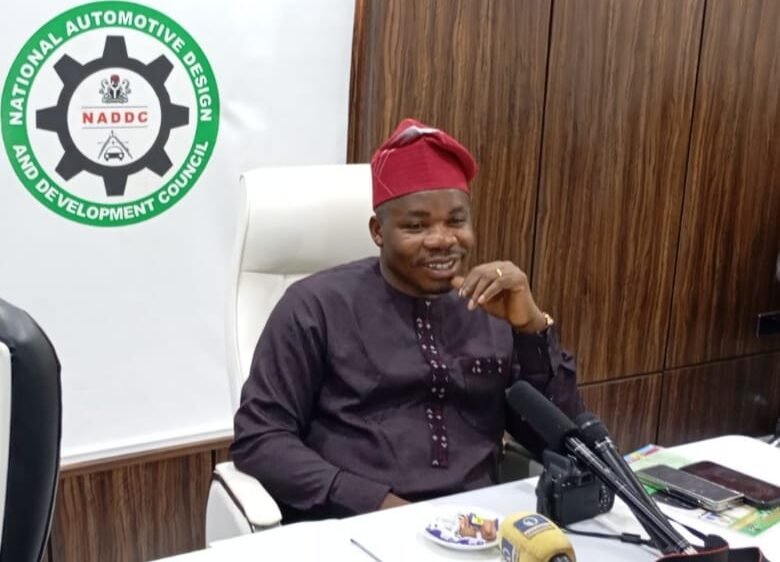
The Director-General of NADDC, Mr Joseph Osanipin, disclosed this during an interactive session with journalists in Abuja, explaining that the projected revenue would come from recycling activities, parts recovery and other vehicle-related value chains.
Osanipin explained that the policy, expected to take effect in 2026, is designed to create an organised framework for disposing of and recycling vehicles that are no longer roadworthy.
“In developed countries, when you buy a new vehicle, you make a payment at the point of registration towards the disposal of that vehicle at the end of its life.
“That is why you do not see abandoned vehicle parts on the roadside or at mechanic workshops,” he said.
According to him, the Nigerian policy will require vehicle owners to pay a modest fee at the point of registration, which will support an ecosystem dedicated to the environmentally safe dismantling, recycling and recovery of vehicle components.
Osanipin noted that over 85 per cent of components from end-of-life vehicles are either reusable or recyclable, adding that such materials currently go to waste.
“Instead of abandoning vehicles by the roadside, people can turn them in and value can be created from them.
“The circular economy associated with this can run into billions of naira and the ELV framework will also stimulate the development of second-hand parts markets and create employment opportunities across the country,” he said.
While highlighting the economic prospects of the initiative, the NADDC boss stressed that environmental and public health considerations were the main motivations behind the policy.
“The most important reason is the environment and the health of the people,” he said.
Osanipin also acknowledged that the introduction of small fees under the policy could meet resistance, but assured that public awareness campaigns would be intensified.
“Sometimes, what is good for you, if you are not told, you may not be willing to accept it. Therefore, there is the need for media support in educating the public on the long-term benefits of the policy,” Osanipin said.


 English