

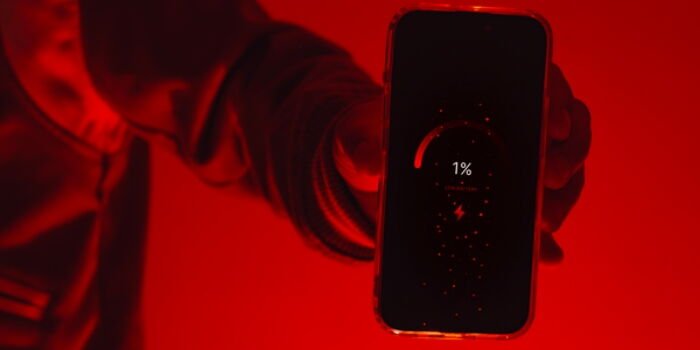
Many smartphone users have experienced the same realisation: your phone hits one per cent, yet it somehow keeps running far much longer than expected.
It often feels like that last percentage refuses to die, especially when you urgently need to send a message, call someone, or check directions.
This common experience has sparked curiosity, with many smartphone users wondering whether phones are designed to “stretch” that final one per cent or if something else is at play. Well, this explainer has all the answers that you need.
A fresh, full battery seems to lose 10 per cent every hour, but once it hits 30 per cent, each percentage seems to last longer and longer. The explanation, according to experts, lies not in magic but in how smartphone batteries and software estimate remaining power.
A photo showing a person browsing LinkedIn on a smartphone.
Photo
Online Tech Tips
Modern smartphones use lithium-ion batteries, which do not measure power in exact percentages but rather in voltage levels that fluctuate depending on usage and conditions.
As a result, the percentage you see on your screen is only an estimate generated by software, not a precise measurement of remaining energy.
IT expert and Auckland-based proprietor of repair store Phone Cloud, Nephi Hatcher, states that “battery percentages are essentially educated guesses”, meaning your phone could still have slightly more charge left than the one per cent suggests.
He adds, “It’s very software-driven as to how well they read it.”
This estimation becomes less accurate at lower levels, which is why the final one per cent can appear to last longer than higher percentages.
Another factor is power management, where phones automatically reduce performance and background activity as the battery gets critically low.
With this factor at play, features like screen brightness, processor speed, and background apps are scaled down to conserve energy and extend usability.
In simple terms, your phone enters a kind of survival mode designed to keep essential functions running for as long as possible.
Nephi Hatcher also points out that “your phone is programmed to avoid shutting down abruptly”, ensuring users have enough time to perform critical tasks before the device powers off.
However, from his experience in the tech field, iPhones have a relatively accurate read on battery life as compared to Androids.
Additionally, user behaviour plays a significant role here, as people tend to use their phones less intensively when they notice the battery is nearly depleted. This reduced activity further slows down power consumption, making the remaining charge last longer than expected.
Temperature, battery health, and device age can also influence how long that final percentage holds.
While it may feel like your phone is bending the rules at one per cent, it is actually a mix of cautious software estimation and energy-saving design.
Ultimately, that stubborn one per cent is less about extra battery and more about smart engineering keeping you connected just a little longer than you need.
File image of Kenyans using smartphones
Photo
Kenyans.co.ke
![Nigerian Man Pulls Gun On VIO Officers During Roadside Clash In Abuja [Video]](https://zolairenergy.com/wp-content/uploads/2026/03/19860-nigerian-man-pulls-gun-on-vio-officers-during-roadside-clash-in-abuja-video-80x80.jpg)


 English