
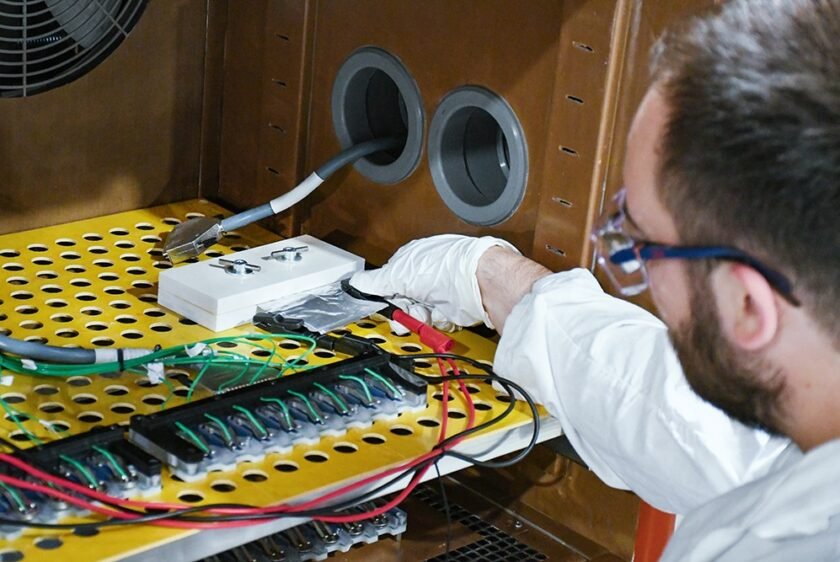
German researchers have developed a sodium-ion battery technology using lignin-based hard carbon as the negative electrode. The 1 Ah battery cell prototype showed no significant degradation after 100 charging and discharging cycles.
Emiliano Bellini
Researchers from Germany’s Fraunhofer Institute for Ceramic Technologies and Systems (IKTS) and the Friedrich-Schiller-University Jena have fabricated a prototype of a sodium-ion battery that uses lignin, a complex organic polymer found in the cell walls of plants, as electrode material.
Lignin is an abundant by-product of the wood and pulp industry. After processing, it exhibits good electrical conductivity, and its redox-active groups can reversibly store and release electrons. For battery applications, lignin is typically carbonized to produce hard carbon.
The research team used lignin supplied by Mercer Rosenthal GmbH, a German company specializing in the production of cellulose, bioenergy, and bio-based chemicals from wood and other renewable raw materials. The lignin was thermally converted into carbon under inert conditions and subsequently processed into negative electrodes.
“The structure of this hard carbon is very suitable for the reversible storage of sodium ions,” the academics explained. “Hard carbon boasts high electrochemical performance, good cycle stability and low acquisition costs, especially if obtained from sustainable raw materials.”


 English