

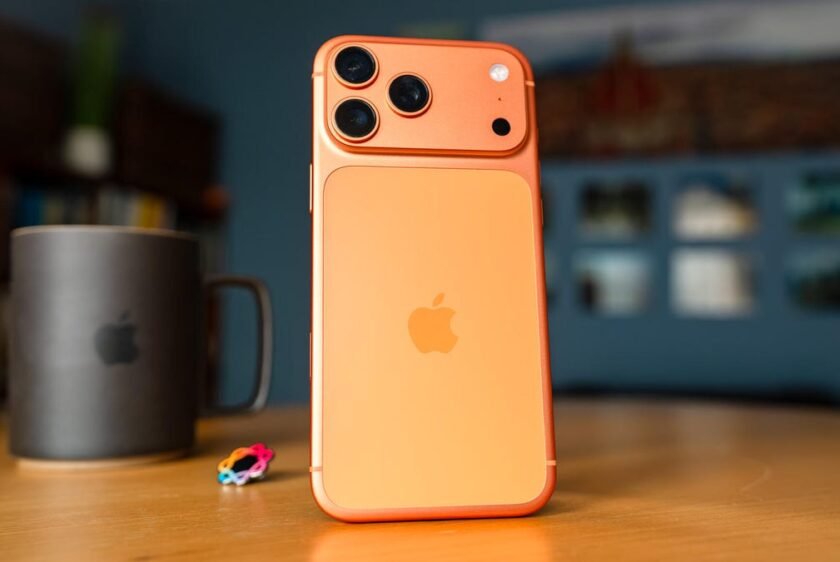

I’ve charged this iPhone in all the wrong ways… for science!
Adrian Kingsley-Hughes/ZDNET
Follow ZDNET: Add us as a preferred source on Google.
ZDNET’s key takeaways
- It’s normal for iPhone battery health to stay at 100% for the first few months.
- Expect battery health to drop by 1 percentage point every 50 recharge cycles.
- Modern batteries are very resilient and can take a lot of abuse.
My iPhone 17 Pro Max was one of the first to roll off the production line and into people’s hands on launch day. Since I’d spent the previous two years absolutely babying the battery in my iPhone 15 Pro Max, I decided to take a different approach this time around.
Also: After charging my iPhone the ‘Apple way’ for 2 years, here’s the state of its battery now
I don’t think it has made any difference.
What I’ve done so far
As of today — Feb. 7, 2026 — my new iPhone has been through 122 recharge cycles over the past 140 days. I’ve had the charge limit disabled so every charge goes to 100%, and I’ve had Optimized Battery Charging disabled. My iPhone can’t seem to figure out my schedule, as I’m somewhat erratic and don’t need an alarm most of the time about 6 a.m., but I get up earlier a few days a week to get some more walking miles under my belt, so this feature doesn’t work well for me.
Here’s how my iPhone’s battery is coping so far.
Adrian Kingsley-Hughes/ZDNET
I also charge my iPhone both wired and wirelessly, using a huge variety of chargers and power banks, and over the past few months it has seen freezing temperatures and baking sun, sometimes not on the same day.
Some days it’s been run flat, and other days it’s been attached to a charger or power bank all day.
Oh, and the whole time, it’s been inside a thick case that does nothing to keep the handset cool.
Also: I changed 10+ settings on my iPhone to significantly extend its battery life (iOS 26 and older)
Without doubt, I’ve used and abused this iPhone harder than any other I’ve owned, and that says a lot, yet my battery is still at 100% capacity.
So, what’s going on?
Am I lucky? Do I have some super special battery in my iPhone that leaked from Apple’s secret orbiting lab? No.
The truth is that modern batteries are incredibly robust and tolerant of a great deal of misuse. Yes, things can occasionally go wrong, but when you consider the billions — yes, billions — of dollars of rechargeable batteries that are out there from big-name and no-name manufacturers, it’s quite incredible that they’re not bursting into flames all around us. In fact, your car, whether it’s gasoline or an EV, is far more likely to burst into flames than your smartphone or tablet is, with gasoline-powered cars making up the bulk of fires.
Also: iPhone battery worse after updating to iOS 26? Here’s why, and how I fixed it
Almost all rechargeable devices make use of a charge controller or battery management chips such as the TP5100 or TP4056. These chips control things like charging speed, charge and voltage cutoffs, as well as putting thermal limitations in place so the battery doesn’t get forcibly charged or discharged when it’s too hot or too cold. I have projects that I put together several years ago that make use of these charge controllers, and the devices have been in continuous use without any handholding.
The features that companies like Apple have built into devices, things like Optimized Battery Charging and charge limits, build on top of what the charge controllers bring to the table. Does it harm to not charge the battery to full until the last minute or to limit charge capacity to something less than 100%? No, and according to the data I’ve come across, there is a benefit. However, if you limit your study to consumer electronics and exclude electric vehicles, the effect is not all that big.
According to Apple, the battery in my iPhone is “designed to retain 80 percent of its original capacity at 1,000 complete charge cycles under ideal conditions.” Note that while Apple makes this claim, the company only offers a one-year warranty for defective batteries, except in Turkey, where consumers get a two-year battery warranty thanks to stronger consumer protection laws, so the company is not prepared to back up these claims.
Also: How to clear your iPhone cache (and why it makes such a big difference)
Based on these figures, I expect the capacity to drop about one percentage point for every 50 recharge cycles. This equates to about two to three years of normal use. Making use of the battery settings might gain you a few weeks, but that’s about it.
So why is my battery still at 100% after more than 100 recharge cycles? Is it not wearing? How long until it starts to decline?
Rechargeable batteries have two different capacities. There’s a rated capacity, which is the capacity of the battery that the device manufacturer orders from the battery maker and puts on the spec sheet, and an actual capacity of the individual battery. The actual capacity is higher than the rated capacity to allow for manufacturing variations. No one wants to fire up a brand-new iPhone and find that the battery is already saying it is worn. Every time my iPhone is charged to full, the operating system keeps track of how much power it took.
The bottom line
My iPhone’s battery is wearing, but it has not yet gone below the rated capacity, so the operating system has not yet begun to report the wear. Almost every new iPhone has this honeymoon period at the beginning where the battery seems to stick at 100% health forever… until it doesn’t.
Also: My iPhone 15 Pro Max battery life went from great to awful in less than two years – what happened?
As soon as the actual capacity drops below the rated capacity, that maximum capacity meter will begin to tick down at around one percentage point per 50 recharge cycles.
I’m very much a battery nerd, and I tracked — obsessively, some might say — the health of the battery in my previous iPhone. As far as the battery was concerned, I did everything right with that device, and by the two-year mark, the handset couldn’t make it through a day without a recharge. I had the battery charge limit set to 80 percent, and I feel like I sacrificed a fifth of my battery’s capacity for nothing.
So I’m going to carry on charging my current iPhone in all the wrong ways. Wish me luck!


 English