
SENSEX 85,567.48
+ 638.12
NIFTY 26,172.40
+ 206.00
CRUDEOIL 5,246.00
+ 141.00
GOLD 136,350.00
+ 2,154.00
SILVER 213,500.00
+ 5,061.00
SENSEX 85,567.48
+ 638.12
NIFTY 26,172.40
+ 206.00
NIFTY 26,172.40
+ 206.00
CRUDEOIL 5,246.00
+ 141.00
CRUDEOIL 5,246.00
+ 141.00
GOLD 136,350.00
+ 2,154.00
A CEEW study finds that, in the following five years, grid flexibility needs will increase at least five times, said Disha Agarwal, Senior Programme Lead at the organisation

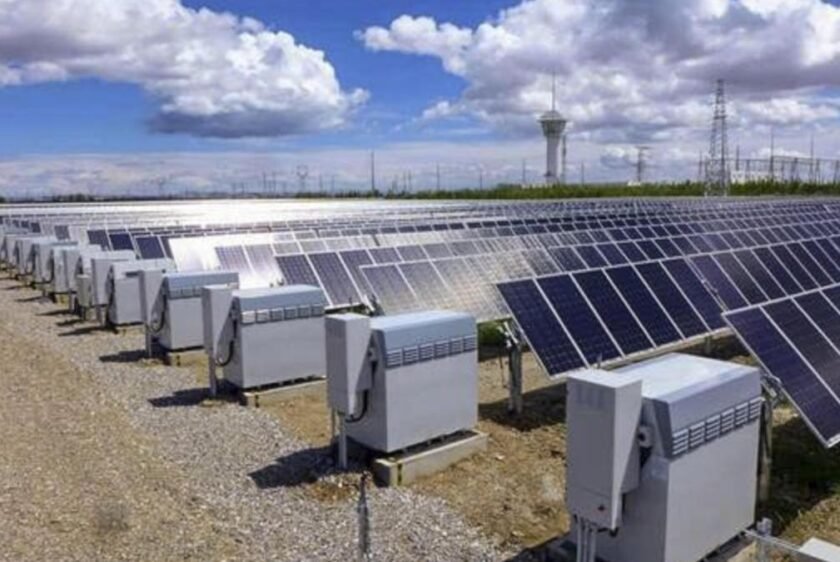
A ground mounted solar power project with battery energy storage system (BESS)
As 2025 nears end, experts associated with the Council on Energy, Environment and Water (CEEW) highlight India’s hits and misses in the renewable energy (RE) sector, as well as the country’s push for a climate action plan.
What were the highlights of the RE sector in 2025?
Disha Agarwal, Senior Programme Lead: Despite challenges of land and grids, a record 45 GW has already (by November) come online. RE also met more than half of the country’s electricity needs on a single day in July, indicating rising shares. Rapidly falling costs emerged as the single biggest driver of growth. Recent tenders show that renewables with battery storage are already the cheapest form of firm power available today. Standalone BESS costs are far lower than fixed costs of new coal plants. However, we took quite some time to start off our BESS journey. Today, despite being the third-largest solar fleet and fourth-largest wind base in the world, India hardly has any operational BESS capacity.
So, it’s really an immediate question of how fast we can add storage, or make our grids more flexible, to take advantage of the low-cost renewables, ensuring affordable and reliable power to all. A CEEW study finds that, in the following five years, grid flexibility needs will increase at least five times. We have a decent pipeline of 68 GWh of awarded BESS capacities, with nearly 10 GWh under-construction.
On the climate action front, how did 2025 pan out?
Dr Vaibhav Chaturvedi, Senior Fellow: Climate action in India witnessed some important developments. Adaptation to climate change impacts was pushed up the agenda, with the contours of India’s national adaptation plan finalised in 2025. This didn’t mean stepping back on mitigation action. India’s RE capacity continued to leap ahead.
One of the highlights of the year was the debate around domestic compliance carbon markets with many stakeholders working hard to understand its form and implications, as firm-specific mitigation targets were notified. Firms also struggled to understand the administrative requirements and economic implications of Europe’s border carbon tax.
On the negotiations front, India kept the pressure up on climate finance and unilateral trade measures to keep the pressure up on the global north.
What was India’s experience in terms of meeting environment-related challenges in 2025?
Dr Vishwas Chitale, Fellow: India experienced an extreme weather event almost every other day in 2025, which is defining the “new normal” of climate change. The first heatwave occurred in Mumbai in February 2025 and throughout the year India witnessed devastating as floods in Punjab and cloudbursts in Himachal Pradesh, which caused severe human and economic losses. Over 80 per cent of India’s population lives in districts highly vulnerable to extreme hydro-met disasters (CEEW, 2021).
Similar impacts were seen across the world, in Europe, over 800 cities reported temperatures higher by 4 degrees celsius than average temperature, while just last month Cyclone Senyar caused the economic loss of close to $20 billion across Indonesia, Malaysia, and Thailand.
Published on December 22, 2025
THIS AD SUPPORTS OUR JOURNALISM.
SUBSCRIBE
FOR MINIMAL ADS.
THIS AD SUPPORTS OUR JOURNALISM.
SUBSCRIBE
FOR MINIMAL ADS.


 English