
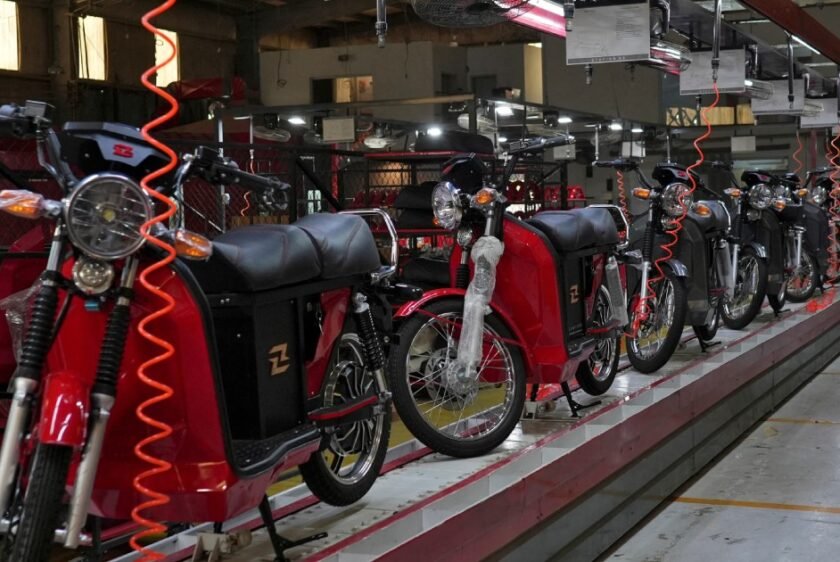
ISLAMABAD/SINGAPORE — Days after Iran effectively blocked shipping through the Strait of Hormuz following the start of US and Israeli attacks in late February, two Pakistani electric motorbike outlets 1,400km away found themselves overwhelmed with enquiries.
Haseeb Bhatti, who retrofits petrol-fuelled bikes with battery-powered motors in the northern city of Rawalpindi, said his March sales surged 70 per cent.
For Ali Gohar Khan, who owns a 7-year-old electric motorbike retail franchise with branches across Pakistan, the recent surge in sales is the steepest ever.
“People have this fear that maybe in the near future, they might not get petrol at all,” Khan said.
The Middle East crisis has sent global fuel prices soaring, compounding pain for Pakistanis already hit by inflation and a post-pandemic economic downturn.
As the nation imports nearly all its oil through the Strait of Hormuz, shortage rumours took hold despite the government’s supply assurances.
About 40 per cent of Pakistan’s petrol is used to fuel the 30 million two-wheelers and three-wheeled autorickshaws that dominate roads in a country where cars are a luxury and public transport is inadequate.
Industry officials and analysts expect the crisis to supercharge an electric vehicle (EV) rush in Pakistan, which would stand out from a broader regional surge for the availability of cheap and plentiful solar power to charge e-bikes.
A switch would also help lower oil imports and bolster foreign exchange reserves, and slash emissions in the world’s most polluted country in 2025.
After the government’s 18 per cent price hike last week, a Pakistani household earning the median wage now pays 31 per cent of its daily income for a litre of petrol — more than all but 22 of 139 countries tracked by globalpetrolprices.com and Our World in Data.
“My monthly salary is 30,000 rupees (S$138). I can barely cover expenses for my family of six with this. How am I supposed to fill my bike?” said Zahoor Ahmed, a security guard in the southern city of Karachi.
From working professionals to college students, more riders have been turning to EVs in recent months.
Last year, higher petrol prices drove up EV sales nearly three-fold to 90,000 units or five per cent of all two-wheelers sold, data from consultancy Renewables First showed.
This year, EVs have accounted for more than 10 per cent of monthly two-wheeler sales for the first time, said Talha Khan, CEO at EV logistics planning company Orko, a transition he expects to accelerate as filling up with conventional fuel can be as much as 10 times more costly than charging.
“Keeping inflation and fuel prices in mind, I took matters in my own hands and bought an electric scooter,” said Mehvish Qureshi, a lawyer in southern Hyderabad.
 Read More


 English