
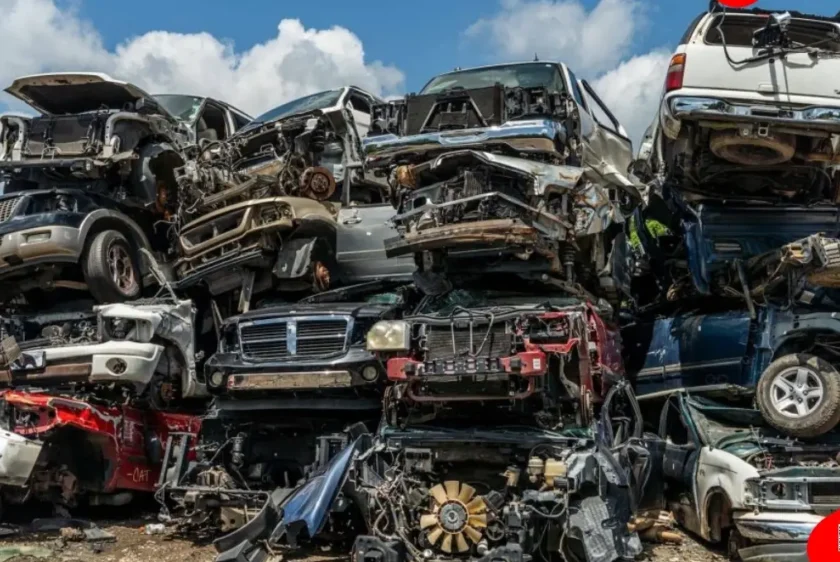
From 2026, Nigerians who buy vehicles or process vehicle registrations will be required to pay a mandatory Vehicle Recycling Fee as the Federal Government rolls out a new End-of-Life Vehicle (ELV) programme to change how cars are imported, used, repaired, and disposed of in the country.
Nigeria wants to stop being a dumping ground for broken-down vehicles, reduce environmental harm from abandoned or poorly dismantled cars, and build a structured recycling and parts-reuse industry that can create jobs and generate major revenue.
1) The recycling fee is planned to begin in 2026
The policy is expected to take effect from 2026, with the fee applied at the point of vehicle registration. In practice, this means it becomes part of the standard cost of registering a car, whether new or used, once implementation starts.
2) It falls under the End-of-Life Vehicle (ELV) programme
This fee is not being introduced as a standalone charge. It is part of a broader ELV framework designed to manage vehicles from import or purchase through usage and then through safe disposal and recycling when they are no longer roadworthy.
3) Government expects large revenue and a formal recycling economy
One of the government’s key projections is that a structured recycling market could generate over ₦150 billion annually. But the bigger goal is not just revenue; it is to create a system where vehicles are tracked, dismantled responsibly, and recycled at scale.
4) The fee is meant to support safe disposal and environmental protection
Nigeria currently has weak formal systems for vehicle disposal. Many end-of-life cars end up abandoned, burnt, stripped unsafely, or dismantled in ways that expose people and communities to toxic materials. The recycling fee is intended to fund a cleaner, regulated method of disposal and material recovery.
5) The model mirrors what many other countries do
In many developed markets, end-of-life disposal is funded upfront—buyers pay into a system during registration, so recycling and disposal are not left to informal operators at the end of the vehicle’s life.
6) Pushback is expected
Officials have acknowledged that Nigerians may initially resist the fee, especially given the high costs of vehicle ownership (import duties, FX pressure, insurance, registration, and maintenance). The government will likely need strong public education to explain how the fee works and what value it delivers.
7) Most old vehicles are still “valuable”
A key argument behind ELV programmes globally is that end-of-life vehicles are not pure waste. A high percentage of components, metals, parts, batteries, and plastics can be recovered, reused, refurbished, or recycled if processed properly.
8) It could reshape Nigeria’s “Belgian parts” ecosystem
Nigeria’s informal used-parts market is massive, but it is loosely structured. The new framework is expected to formalise parts recovery, dismantling standards, resale channels, and logistics—potentially improving safety and traceability.
9) Jobs are a major selling point
The ELV system is expected to create jobs across dismantling, refurbishing, recycling plants, logistics, spare parts processing, and resale. If implemented well, it could open a new industrial value chain around automotive waste.
10) The used-vehicle import issue is central to the reform
Nigeria’s market is still heavily dominated by tokunbo vehicles. With high used-vehicle import volumes, regulators want to prevent imports of vehicles that are already near the end of their life cycle and likely to become scrap shortly after arrival.
11) Pre-export certification is expected to become mandatory in 2026
Another major shift tied to this reform is pre-export certification for used vehicles coming into Nigeria. The purpose is to stop exporters from shipping end-of-life or unroadworthy vehicles into the country.
12) Exporters, not Nigerian buyers, are expected to bear certification costs
Under the stated plan, the cost of certification should be paid by foreign exporters. If this is enforced properly, it could reduce the inflow of near-scrap vehicles without simply transferring another major cost to Nigerian consumers.
13) EV and CNG conversion is part of the longer-term direction
The reforms are also being positioned as a bridge into a more modern auto sector—one that supports electric vehicles (EVs) and compressed natural gas (CNG) conversions. Training and certification programs are expected to expand so technicians and regulators can handle new vehicle technologies.
14) A legal backing for the auto industry plan is in view
Government plans reportedly include turning the National Automotive Industry Development Plan into an Act of Parliament, which would give these reforms stronger legal foundation and continuity beyond policy announcements.


 English