


ⓘ Notebookcheck (Marcus Herbrich)
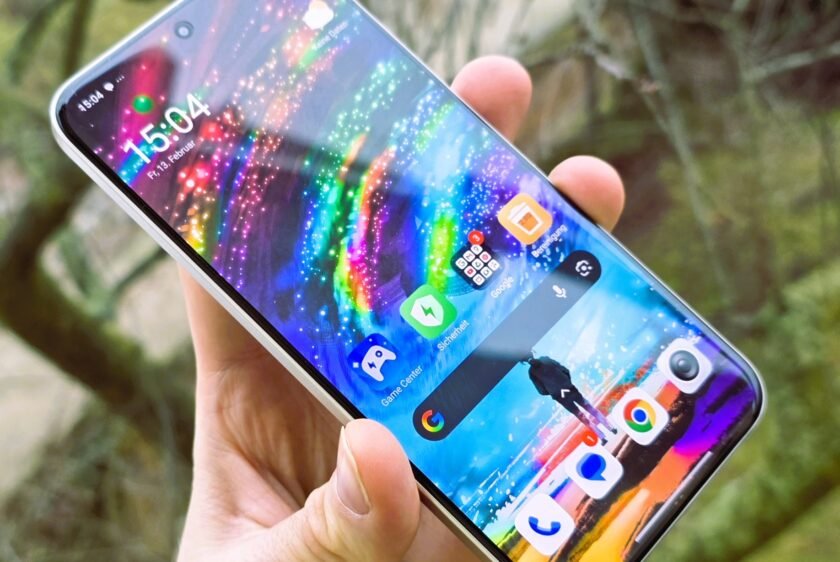
Xiaomi positions the Redmi Note 15 Pro+ as a budget-friendly mid-range smartphone. This review verdict explains why we weren’t entirely impressed by the device during our testing, despite its beautiful OLED screen, long battery life, and highly durable design backed by IP68 rating and SGS certification.
Whilst the Redmi Note 15 Pro+ offers premium features such as IP68 rating, Gorilla Glass Victus 2, a large silicon-carbon battery with 100-watt fast charging, and a 200 MP Samsung camera, there are several crucial reasons to reconsider purchasing the device. Its closely related sibling models – the Redmi Note 15 Pro and Poco M8 Pro – are attractive mid-range alternatives to the Redmi Note 15 Pro+ (starting at approx. $470 on Amazon)
We’ll outline our two major complaints about the Redmi Note 15 Pro+ below. That said, the device could still be a great option for those who prioritise durability and long battery life. Read our full review to explore its strengths in detail.
Even though the Qualcomm Snapdragon 7s Gen 4 powering the device is a minor upgrade over its predecessor, Xiaomi has missed the chance to give its mid-range offering a noticeable boost in system performance. In everyday use, the Note 15 Pro+ frequently exhibits significant stuttering and lag. The Snapdragon 7s Gen 4 is simply too underpowered for the fairly high-resolution OLED panel.
More powerful alternatives are available at around $600 RRP, such as the Poco F7.
Despite reaching a high peak brightness of almost 3,000 nits (APL18: 3,146 nits) during our testing, the phone’s OLED display failed to fully impress us in everyday use. This is because the brightness drops sharply after just a short while, falling below 990 nits in our measurements, and is even much lower in manual mode.
This substantial reduction in brightness could affect the screen’s legibility outdoors. Particularly in summer, reflections on the glass surface may make on-screen content difficult to read.

I have always been very passionately interested in mobile technologies, especially smartphones. Being a tech enthusiast means the half-life of my devices isn’t exactly long, and being the latest hardware is not enough to suffice as the manufacturer and operating system play a minor role – the most important aspect for me is that the device is state-of-the-art. After posting for Mobi Test I joined Notebookcheck in 2016, where I have been pursuing my enthusiasm for technology by reviewing the latest smartphone, tablet, and accessory trends.

Translator: Zhiwei Zhuang – Translator – 577 articles published on Notebookcheck since 2022
After graduating with a bachelor’s degree in environmental engineering, I moved from Singapore to
Cologne in 2014 and began pursuing a career as a freelance translator. Much of my translation work
focuses on science, engineering and technology. My fascination with computers and mobile
electronics began when I was young. And I have fond memories reading countless tech and gaming
magazines. Working with Notebookcheck gives me the opportunity to incorporate my personal
interests into my professional work.
Marcus Herbrich, 2026-02-20 (Update: 2026-02-20)


 English