

Haley Zaremba
Haley Zaremba is a writer and journalist based in Mexico City. She has extensive experience writing and editing environmental features, travel pieces, local news in the…
More Info
Set us as your preferred Google source
Premium Content
By Haley Zaremba – Apr 15, 2026, 4:00 PM CDT
- The global lithium-ion battery market hit $150 billion in 2025, but safety and supply chain vulnerabilities are driving serious investment in alternatives including solid-state and nuclear battery designs.
- Researchers at Oak Ridge National Laboratory have developed a new polymer electrolyte that could solve one of solid-state batteries’ biggest technical hurdles — slow ion movement — with potential applications in EVs and grid-scale storage.
- China controls roughly half the global lithium market and dominates EV battery production. Emerging solid-state and lithium-free battery technologies are increasingly framed as a strategic priority for Western energy independence.
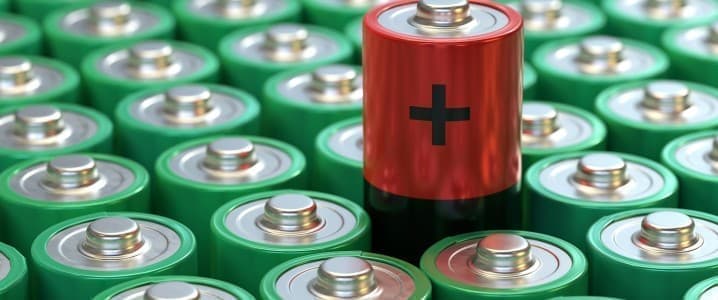
The global battery sector is on fire – and we’re not just talking about lithium-ion battery explosions. In 2025, the global lithium-ion battery market topped USD $150 billion in 2025, marking a stunning 20 percent year-on-year increase. But current lithium-ion battery design has some key limitations, opening up a potentially massive market for competitive designs. One of the major frontrunners are solid-state batteries, which could potentially offer higher energy density, faster recharging times, and better safety than battery cells that rely on liquid electrolytes.
Because of their great potential, lots of research and development dollars are currently being poured into developing commercially viable and scalable solid-state batteries of many forms. Current lithium-ion batteries are powered by lithium ions flowing through a liquid electrolyte, whereas solid-state batteries use a solid electrolyte, thereby eliminating the need for a bulky separator component that separates positive and negative electrodes. This makes solid-state batteries lighter and therefore more ideal for electric vehicles, among other benefits.
“Plain and simple, solid electrolytes provide a safer and more stable environment for lithium ions to move through, enabling faster charging,” reports Popular Mechanics. The result is a lighter, faster-charging model that avoids the flammable liquid that makes lithium-ion batteries a major and increasing fire hazard. Just this week, a fire at a battery factory in Perth, Australia resulted in a widespread HAZMAT warning.

Luckily, researchers are making major gains in developing practical solid-state batteries that could be hitting the market soon. In the United States, scientists just discovered a new super polymer that could be integral for solid-state batteries in electric vehicles as well as fuel scales and even grid-scale energy storage. “The innovative solution, engineered by researchers at the Department of Energy’s Oak Ridge National Laboratory (ORNL), tackles slow ion movement, the restricted, sluggish transport of ions within the electrolyte,” increasing conductibility and thereby potentially solving one of the biggest hurdles in solid-state development, according to a recent report from Interesting Engineering.
At the same time, another United States-based firm is working on developing a state-of-the-art nuclear solid state battery which would potentially be able to sidestep lithium completely. NRD LLC, a New York-based nuclear energy company, says that it has developed a battery model that it claims “can deliver continuous power for more than a century without maintenance” thanks to a betavoltaic design powered by Nickel-63.
The battery generates energy through radioactive decay, a technology which has been around since the 1970s but had since fallen out of favor. However, the red-hot battery market has brought nuclear batteries back to the fore, as they can be indispensable in certain contexts. “The system is sealed in a solid-state architecture and is designed for applications where replacing or recharging batteries is not practical,” reports Interesting Engineering in a separate article.
Nuclear batteries are just one small part of a broader push to innovate away from lithium. Lithium-ion batteries have become the lifeblood of the tech sector, powering a whopping 70 percent of all rechargeable devices, and are integral to tech infrastructure from electric vehicles to smartphones to utility-scale energy storage. But while lithium has become indispensable thanks to its high energy density and efficacy in a wide range of temperatures, there are some major drawbacks to our increasing reliance on this finite ‘white gold.’
While it’s incredibly useful, lithium has some significant logistical trade-offs. In the context of energy storage, for example, lithium-ion batteries can only hold onto energy for a maximum of about four hours, while much longer-term storage options are sorely needed for energy security. Moreover, lithium extraction is extremely water-intensive and environmentally costly, posing significant risk to the ecological and public health of the communities where it is mined. It can also be a hazard in the products themselves, as it is highly flammable.
Finally, and perhaps most critically, Lithium markets are highly consolidated in the hands of just a few global players, and many of those are considered to be geopolitical risks – especially China, which alone controls half of the global lithium market. “For over a decade, China has meticulously orchestrated a strategic ascent in the global electric vehicle (EV) batteries market, culminating in a dominance that now presents a formidable challenge to Western manufacturers,” the EE Times reported last year. This consolidation serves to function as “almost a moat” around Chinese battery production, protecting the sector from international competition.
The United States’ progress in creating alternative next-gen battery models is therefore a major step forward in diversifying battery supply chains on a global scale, and a critical entry point for easing Beijing’s chokehold on clean energy tech. And the United States is not alone. Other countries are also racing to develop competitive technologies, setting the stage for a more resilient future for the global energy and tech sectors.
By Haley Zaremba for Oilprice.com
More Top Reads From Oilprice.com
- China’s Petrochemical Sector Cuts Output as Costs Climb
- Oil Shock Exposes Creates an Opportunity for Libya
- Asia Faces Strained Supply Lines and Volatile Energy Markets
Download The Free Oilprice App Today


Back to homepage
Haley Zaremba
Haley Zaremba is a writer and journalist based in Mexico City. She has extensive experience writing and editing environmental features, travel pieces, local news in the…
More Info
Related posts
Leave a comment


 English