

The good, bad, and ugly reactions the move has evoked as China gains a toe hold in North America.
Canada’s deal with China to allow electrified vehicles into the Canadian market has generated interest, debate, concerns, and threats—arguably a larger volume of heated rhetoric than the actual number of cars that will be imported to the country.
For now, at least, the amount of Chinese-built cars that will be allowed to be sold in the Canadian market in the wake of the trade agreement reached between the two countries in January 2026 amounts to little more than a crack in the pavement, Stephanie Brinley, associate director of S&P Global Mobility, told MotorTrend.
Under that agreement, Canada will lower the tariff rate from 106.1 percent to 6.1 percent on 49,000 electrified vehicles made in China, equal to roughly 2.5 percent of annual new car sales in Canada. That’s for the first year. The quota will increase by 6.5 percent a year to a maximum of 70,000 vehicles by 2030, limiting imports to less than 3.0 percent of the Canadian market share over the short term.
The overarching goal is to offer more affordable EVs in Canada, but the overall quota will also allow for Chinese-made hybrids, plug-in hybrids, and extended-range hybrids, all of which have internal combustion engines as well as electric motors and batteries. The electrified vehicles do not have to be under the deal’s $35,000 Canadian price cap (about $26,000 U.S.) to enter Canada immediately. The requirement for affordable, sub-$35,000 vehicles will be phased in starting with the 2027 quota year (March 2027). The price refers to the import price, or landing cost, at the border, not the final retail price. In 2027, 10 percent of the imported quota must be under $35,000. In 2028, that number rises to 20 percent, and in 2029, 35 percent must be under the $35,000 cap. By 2030, the affordable price tag must be attached to half of the imports.
Chinese Automakers Grow in Australia
Canada’s guardrails contrast with those of Australia, where China became the No. 1 source for new vehicle sales in February, a glimpse of what could happen without any restrictions in place. In Australia, made-in-China vehicles (EVs as well as vehicles with internal combustion engines) now account for almost one in four vehicles sold, passing Japan, which had been sales leader in the country for decades. Among EVs, 80 percent were Chinese imports. The trend is not expected to slow down.
Officials in Australia have marveled by the speed at which China has grown in that market. Australia has few tariffs, regulatory requirements, or other barriers to entry for vehicle imports. Chinese brands had less than 2 percent market share before the pandemic and now have almost 25 percent with forecasts it will reach 43 percent of the market by 2035, according to the Australian Automotive Dealer Association.
Regulations in Canada
Canada has more regulatory hurdles. Its safety standards are similar to those of the U.S., which are quite different in scope than the standards in Europe and Asia. Due in part to the fact that Chinese EVs are unlikely to be sold in the U.S. anytime soon due to a 100 percent tariff barrier imposed by the American government, Chinese automakers will face high homologation costs to sell what amounts to a small number of vehicles in Canada. At least in the short term, that is. They might deem it a prudent and strategic investment in the long-term if they see it as inevitable that they will break into the U.S. market eventually.
The quota system restricts electrified vehicles but does not address imports of combustion-powered models. Chinese automakers who produce vehicles with multiple powertrains might want to use the quota to bring in EVs, make a name for themselves, and then add other models to the mix to make it more of a viable proposition for automakers as well as dealers, Brinley said.
Like in the U.S., EV sales in Canada were hurt when Canada suspended its federal incentives to buy electric. EVs produced by General Motors were the top sellers in 2025, followed by Tesla, and overall, EVs accounted for 6.2 percent of new vehicles registered in Canada last year. The federal government brought back federal rebates for EVs in February, but Chinese vehicles will not qualify for the incentive.
First Come, First Served
The 49,000-vehicle quota will be shared by all interested parties: Chinese brands as well as more established automakers who build cars in China. That potentially includes Tesla Model 3s produced by the automaker’s Shanghai plant, Chinese-built Volvos and Polestars, perhaps even the Chinese-made hybrid version of the Lincoln Nautilus.
Everything’s being done on a first come, first served basis, there’s a finite timeline that expires, and brands need a distribution network, Brinley said.
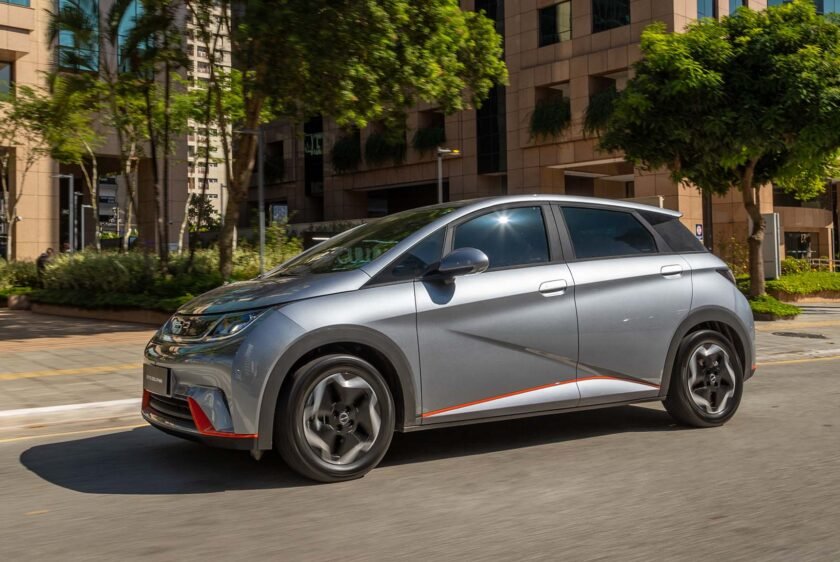
Of China’s domestic brands, BYD has made the most progress in its bid to start selling vehicles in Canada. It has hired an Ontario-based retail consultant to help with plans to open some 20 sales locations, starting in Toronto, according to the Globe & Mail. Subsequent stores would then potentially open in Montreal, Calgary, and Vancouver. BYD has also registered its production facilities with Transport Canada, a prerequisite for importing vehicles into Canada. BYD hasn’t said what models it would sell in Canada, but the Dolphin hatchback or Atto 3 compact SUV are reasonable options.
BYD is the world’s largest EV manufacturer, and it continues to grow. Its innovations are world-leading, such as its Flash charging that can reportedly take a battery pack for its new premium Denza brand models from 10 percent to 70 percent in just five minutes and to 97 percent in nine minutes with its own fast chargers. No other competitor comes close.
Geely, the Chinese company that owns Volvo, Polestar, Lotus, and others, already sells vehicles in Canada through each brand’s retail network, but at present, the made-in-China models are subject to high tariffs. Geely could also expand its offerings from its other, Chinese-centric brands such as Zeekr or Lynk & Co. Chery Automobile is also reportedly looking at setting up dealerships in Canada.
Not Everyone in Canada Likes the Deal, but Some Do
In Canada, the trade agreement is proving controversial. It’s a federal deal that Canada’s Liberal Party prime minister supports, but the federal Conservative leader doesn’t, nor does it have the support of all provinces. Ontario Premier Doug Ford, for one, has condemned it, going so far as to call Chinese vehicles “spy cars.” Automakers and suppliers have also voiced concern, even though the deal is designed to spur Chinese investment in the Canadian auto industry. So far, however, no deals have been announced for any parts supplier or manufacturing facility.
As for auto dealers, many seem to be open to the deal. BYD and Geely are said to be in talks with Canadian dealers around making plans for sales and distribution efforts.
Generally speaking, Canadian consumers like the idea of expanded choice, especially when it comes to more affordable vehicles, and Chinese models tend to offer more content for less money. Sixty-one percent of Canadians surveyed by pollster Leger between January 30 and February 2 were in favor of Chinese EVs in the Canadian market.
When asked whether they had any concerns, 38 percent of respondents cited vehicle quality and impacts on the Canadian auto industry, while only 33 of respondents cited privacy and security concerns.
Then there’s the matter of vehicle crash safety. Traditionally, Chinese vehicles have been seen as less safe in crash testing, with weak structural integrity and poor airbag performance, largely because they only needed to meet the lower safety standards for their domestic models. But that’s changed for the main players. Some Chinese cars now dominate in global safety rankings and earn top ratings. With so many automakers in China, there is inconsistency on the safety front. It’s the larger players with strong scores who are expected to reach North American shores first, Brinley said.
Security Risks and Trump Retaliation
There are concerns about national security raised by Ontario’s Premier Ford and others as well as fear of retaliation from the U.S., which is actively working to keep Chinese imports out of the American market. Relations are crucial as the U.S., Canada, and Mexico have a July deadline to review the USMCA trade agreement between them, which is seen as a key pact for the auto industry.
The move isn’t without risk. The Trump administration has threatened retaliation if Canada becomes a back door for Chinese vehicles to enter the U.S. President Donald Trump has threatened to put 100 percent tariffs on all Canadian goods as a potential retaliatory measure. But the president has also said he is open to Chinese automakers building plants in the U.S.
Setting Up Shop
The trade deal also requires Chinese automakers to establish joint ventures to make electric vehicles or batteries in Canada within three years. The Canadian government wants to reduce its dependence on the U.S.
BYD, which has been expanding in Europe, is considering building a plant in Canada. BYD wanted to enter the Canadian market in 2024, but those plans were dropped when Canada introduced a 100 percent tariff on Chinese EVs. At that time, BYD said it was open to building cars in Canada and/or acquiring a rival automaker. BYD executive vice president Stella Li told Bloomberg she wants BYD to put up its own plants; she isn’t interested in a joint venture.
Stellantis is looking at building EVs in Canada with its Chinese partner Zhejiang Leapmotor Technology Co., with talks in the early stages, according to Bloomberg. The vehicles would be built at the Brampton, Ontario, plant that has been idled since production of the Dodge Charger and Challenger and Chrysler 300 stopped. The plant was expected to build the new Jeep Compass, but Stellantis subsequently moved production to its plant in Illinois instead due to tariff concerns.
Stellantis bought a 20 percent stake in Leapmotor in 2023, and the two companies formed a joint venture, Leapmotor International, which plans to make vehicles in Spain, Brazil, and Malaysia. Unifor, the union representing Canadian automakers, has expressed concerns that Leapmotor could use Brampton as a knockdown kit plant, doing the primary assembly work in China and then shipping them to Canada for final assembly only.
A Chinese car, even if were to be built in Canada, might not be allowed entry into the U.S. under regulations that restrict the import and sale of connected vehicles with software from China and Russia, starting with the 2027 model year, and with hardware from the two countries starting with the 2030 model year. The concern is the ability of vehicles to collect sensitive data on American owners.
Mexico Is a Foothold
At present, more than 30 Chinese brands operate in Mexico, and Chinese cars accounted for about 15 percent of overall Mexican sales in 2025. With popular products, Chinese automakers are expected to end up with about 25 percent of the market but with fewer brands than today. Dealers in Mexico rank BYD as their first choice for a new franchise, but in a recent survey, most said they haven’t made money on Chinese vehicles yet. And they can often wait months for replacement parts.
After Chinese brands got a foothold in Mexico, the country subsequently imposed a 50 percent tariff on vehicles imported from China, acquiescing to pressure from the U.S.
GAC (Guangzhou Automobile Group) has announced plans to start building vehicles in Mexico later this year, the first Chinese automaker to do so. The vehicles will be made specifically for the Mexican market. GAC has not said where it will build the cars, but we suspect it will repurpose one of the two plants that Nissan will no longer use.
Eventually, Chinese brands with the wherewithal to sell cars in North America will be able to do so, Brinley said. China’s toe hold in Canada looks to be just another inevitable step in that direction.
Stay Ahead of the Curve.
Get the newest car reviews, hottest auto news, and expert analysis of the latest trends delivered straight to your inbox!


 English